

Top 10 Gentle Cleansers for Sensitive Skin
Table of Contents
- What to Look for in a Gentle Cleanser
- Ingredients to Avoid for Sensitive Skin
- Top 10 Gentle Cleansers for Sensitive Skin
- Dermatologist Recommended Face Wash for Sensitive Skin
- How to Improve Skin Texture Naturally
- Frequently Asked Questions
Last Updated: September 21, 2026
What to Look for in a Gentle Cleanser
The best gentle cleansers for sensitive skin share three traits: a soap-free surfactant system, a pH close to skin's natural acid mantle, and zero added fragrance.
Here's the practical checklist:
- Soap-free surfactants that lift oil without dissolving the lipid barrier
- pH-balanced formulas in the 4.5 to 5.5 range
- Fragrance-free and hypoallergenic labeling, not just "natural"
- Non-comedogenic so pores stay clear
- Ceramides, niacinamide, or hyaluronic acid to support moisture retention
Key Ingredients That Support the Skin Barrier
Ceramides replace lost barrier lipids, niacinamide calms redness, hyaluronic acid pulls water into the upper layers, and green tea and colloidal oat reduce visible redness.

Ingredients to Avoid for Sensitive Skin
Sulfates top the list of ingredients to avoid for sensitive skin. Sodium lauryl sulfate and its relatives create rich foam by stripping oil aggressively, and that same action strips the barrier.
Watch for these:
- Synthetic sulfates (SLS, SLES) that over-clean
- Added fragrance and essential oils that trigger contact reactions
- Alcohol denat that leaves skin tight and dry
- Physical scrubs with rough particles that cause micro-tears
- High-concentration acids used daily instead of as periodic exfoliation
Top 10 Gentle Cleansers for Sensitive Skin
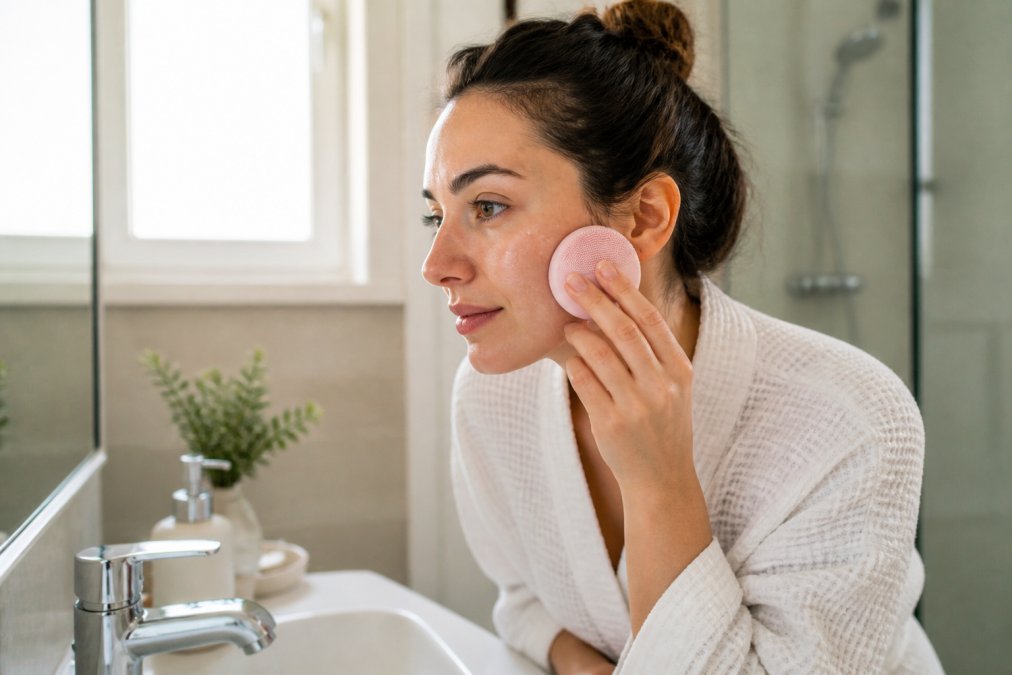
The strongest gentle cleansers for sensitive skin pair soft application tools with barrier-respecting formulas.
1. Pristine Soap Bar: Green Clay, Bamboo, and Green Tea
Our top pick for reactive and dry skin. Green clay lifts impurities gently while bamboo and green tea soothe. Cruelty-free, with no synthetic dyes, alcohol, parabens, phthalates, or synthetic sulfates.
2. Facial Brush with Bamboo Handle
Superfine bamboo fibers make this the softest manual option in the lineup. Non-electric, so no batteries or vibration to aggravate reactive skin, and the bamboo handle and naturally derived bristles keep waste low.
3. Facial Cleansing Brush with Soft Bristles and Silicone
A step up in cleansing power without harshness: soft bristles and silicone exfoliate and clear pores, the ergonomic handle suits daily use, and it's compact enough to travel with.
4. Silicone Facial Cleansing Brush with Cat Paw Design
Ultrasonic vibration delivers a deep yet gentle cleanse with adjustable intensity. The silicone rubber is soft, safe, and easy to rinse clean, and five color options keep it fun.
5. Cat Paw Silicone Facial Cleansing Brush
Designed for all skin types, this compact tool cleans, applies, and massages in one. The dense adhesive dot head gives a soft touch, the silicone rinses clean in seconds, and at 0.09 kg it travels easily.
6. Double-Sided Silicone Facial Cleansing Brush
Natural pine and soft silicone meet in a double-sided design built for a deep, gentle clean. It clears pores, exfoliates, helps prevent blackheads, and promotes circulation and better absorption. Non-electric, durable, and suited to all skin types.
| Product | Price | Type | Best For |
|---|---|---|---|
| Pristine Soap Bar | $42.00 | Soap bar with loofah | Dry and reactive skin |
| Facial Brush with Bamboo Handle | $38.00 | Manual brush | Daily soft cleansing |
| Soft Bristle and Silicone Brush | $35.00 | Manual brush | Combination skin |
| Cat Paw Brush with Vibration | $37.00 | Electric silicone | Customizable deep clean |
| Cat Paw Silicone Brush | $28.00 | Manual silicone | Travel and application |
| Double-Sided Silicone Brush | $26.00 | Manual silicone | Exfoliation and circulation |
Dermatologist Recommended Face Wash for Sensitive Skin
A dermatologist recommended face wash for sensitive skin does one job well: it removes oil, sweat, and residue without disturbing the barrier, soap-free surfactants, a pH-balanced formula, no fragrance. What separates a genuinely gentle cleanser from a marketing claim is the surfactant chemistry underneath the label.
Facial Brush with Bamboo Handle →
Surfactant Classes, Ranked by Irritation Potential
Surfactants lift oil so water can rinse it away. They are not all equal, and the class a formula uses predicts how your barrier will respond.
- Anionic surfactants (sodium lauryl sulfate, sodium laureth sulfate) clean aggressively and foam heavily. They are the most likely to strip the lipid barrier and are the first thing to eliminate from a reactive routine.
- Amphoteric surfactants (cocamidopropyl betaine, sodium cocoamphoacetate) are milder and often paired with anionics to reduce the overall irritation load. Cocamidopropyl betaine itself can trigger contact reactions in a small share of users, so patch testing still matters.
- Nonionic surfactants (coco-glucoside, decyl glucoside, lauryl glucoside) are the gentlest common class. They clean without heavy foam and are the backbone of most barrier-friendly formulas.
- Amino acid surfactants (sodium cocoyl glycinate, sodium lauroyl methyl isethionate) sit between nonionic and amphoteric in mildness and rinse clean without a tight after-feel.
What 'Dermatologist Tested' Actually Means
Dermatologist-tested products earn that label through controlled patch testing, not marketing: a manufacturer applies the formula to a supervised panel and records reactions over a set period. The label tells you a test happened, not how many people were tested, how long, or whether any reacted. Treat it as a floor, not a guarantee.
More useful signals to look for on the label:
- Full ingredient list in descending order, if a brand hides behind a short 'key ingredients' panel, you cannot evaluate the surfactant system.
- Fragrance-free rather than unscented, 'unscented' can mean a masking fragrance was added to neutralize the smell of raw materials.
- Non-comedogenic, relevant if you are also acne-prone, since some emollients that help a dry barrier can clog pores.
- National Eczema Association acceptance, a voluntary review that screens for ingredients known to irritate eczema-prone skin. It is not a government approval, but it is a published standard you can look up.
Matching the Cleanser to the Condition, Not Just 'Sensitive'
'Sensitive skin' is a symptom description, not a diagnosis. The cleanser that suits rosacea-prone skin is not always the one that suits eczema-prone skin, and treating them as one category is where most routines go wrong.
- Rosacea-prone skin reacts to heat, friction, and vasodilating ingredients. Look for a cream or lotion cleanser with no foaming surfactants at all, rinse with lukewarm water, and avoid any physical exfoliation. Green tea and colloidal oat are common soothing additions.
- Eczema-prone skin has a measurably weaker barrier and loses water faster. A lipid-rich cream cleanser with ceramides, glycerin, or colloidal oat supports the barrier during washing. Skip anything with fragrance or essential oils, including 'natural' botanical blends.
- Contact-dermatitis-prone skin reacts to specific ingredients rather than to cleansing in general. The fix is elimination and patch testing one product at a time, not switching to a gentler formula.
- Acne-prone skin that is also reactive needs a non-comedogenic, non-foaming formula. Benzoyl peroxide washes are too harsh for a compromised barrier and are better reserved for spot treatment after the barrier has recovered.
Ingredient Interactions to Watch
A gentle cleanser can still irritate if paired badly with the rest of your routine. A few patterns are worth knowing:
- Retinoids and exfoliating acids thin the barrier temporarily. On nights you use them, a non-foaming cream cleanser is the safer choice than anything with a glucoside surfactant and light exfoliation.
- Vitamin C serums are acidic and can sting on a freshly cleansed, barrier-compromised face. Cleansing with lukewarm water and patting dry rather than rubbing reduces the sting.
- Benzoyl peroxide and adapalene both increase photosensitivity and dryness. A ceramide-containing cleanser helps offset the drying effect without interfering with the active.
- Layering multiple actives in one routine multiplies irritation risk regardless of how gentle the cleanser is. One active at a time, introduced slowly, is the reliable approach.
How to Improve Skin Texture Naturally
Improving skin texture naturally starts with consistency, not intensity: gentle exfoliation once or twice a week, daily moisture retention, and sun protection do more than any single product. But texture problems have different causes, and the fix depends on which one you are dealing with.
Match the Approach to the Cause
- Rough, flaky texture usually signals a compromised barrier losing water faster than it can replace it. The fix is more hydration and fewer actives, not more exfoliation. A ceramide or glycerin-rich moisturizer applied to damp skin within a minute of cleansing is the highest-leverage step.
- Congested, bumpy texture comes from dead cells and oil trapped in pores. Gentle chemical exfoliation with lactic acid or mandelic acid, both larger-molecule acids that sit on the surface rather than penetrating deeply, is better tolerated than glycolic acid on reactive skin. Once or twice a week is the ceiling.
- Dull, uneven texture is often dehydration plus sun damage. Daily broad-spectrum sunscreen with an SPF of 30 or higher prevents further damage; niacinamide supports the barrier and can help even tone over time.
- Texture from rosacea or eczema flares should not be treated with exfoliation at all. Calm the flare first with a barrier-supportive routine, then reassess. Exfoliating inflamed skin makes the texture worse.
A Routine That Respects a Reactive Barrier
- Cleanse morning and night with a gentle, pH-balanced formula. If your skin feels tight after washing, the cleanser is too strong, not the routine.
- Exfoliate gently twice weekly using a soft silicone brush or a lactic acid toner, never a harsh scrub. Stop if you see redness or stinging.
- Apply a hydrating serum with hyaluronic acid or niacinamide to damp skin.
- Seal with a moisturizer containing ceramides or emollients. This is the step that actually holds water in.
- Wear sunscreen daily to prevent texture damage from UV exposure. This is non-negotiable if you are using any exfoliating acid.
What to Expect and When
Redness reduction follows the same path as texture improvement: calm the barrier first, and visible change in tone and smoothness tends to follow within weeks, not days. A realistic timeline:
- Days 1-7: Less tightness after cleansing, less stinging when applying products.
- Weeks 2-4: Smoother surface texture as dead cells turn over normally again.
- Weeks 4-8: More even tone and reduced visible redness, assuming no new irritants were introduced.
The Sustainability Angle Most Guides Skip
Texture-focused routines generate a lot of waste: single-use wipes, cotton rounds, plastic-bristled brushes, and unrecyclable packaging. For reactive skin, reusable tools and refillable or bar-format cleansers cut waste without changing what touches your face.
A few practical swaps:
- Replace disposable cleansing wipes with a reusable silicone brush or a soft bamboo-handled brush.
- Choose bar cleansers over bottled where the formula suits your skin; they typically use less water and less plastic per use.
- Rinse and dry reusable tools fully between uses. A damp brush grows bacteria, which is the opposite of what reactive skin needs.
Frequently Asked Questions
What is the best gentle cleanser for sensitive skin?
The best gentle cleanser for sensitive skin depends on your specific needs. Look for fragrance-free, pH-balanced formulas with soothing ingredients like ceramides and niacinamide. A soap bar enriched with green clay, bamboo, and green tea is a solid option because it cleanses, exfoliates, and moisturizes without irritants. Avoid sulfates, alcohol, and synthetic dyes. Always patch test a new product on your inner arm for 24 hours before using it on your face.
How do I know if a cleanser is safe for sensitive skin?
Check the label for fragrance-free, hypoallergenic, and non-comedogenic claims. Ingredients to avoid for sensitive skin include synthetic sulfates, parabens, phthalates, alcohol, and synthetic dyes. A pH-balanced formula close to your skin's natural pH of about 5.5 helps protect the lipid barrier. Patch testing is the most reliable way to confirm a cleanser won't trigger redness or irritation before committing to full-face use.
Should I use a foaming or cream cleanser for sensitive skin?
Cream and oil-based cleansers are generally better for sensitive skin because they clean without stripping the lipid barrier. Foaming cleansers can feel refreshing but often contain surfactants that leave reactive skin tight and dry. If you prefer a foaming texture, choose a soap-free formula with emollients. Cleansing balms and micellar water are also gentle options for removing makeup before a second cleanse.
What gentle cleanser does a dermatologist recommend?
Dermatologists typically recommend fragrance-free, pH-balanced cleansers with ceramides, niacinamide, or hyaluronic acid. They favor soap-free formulas that support the skin barrier and reduce transepidermal water loss. Look for products labeled dermatologist-tested or hypoallergenic. Non-comedogenic options are especially important if you're prone to congestion. A gentle cleanser should leave your skin feeling soft, not tight or squeaky.
How can I improve skin texture naturally while cleansing?
Gentle exfoliation is the key to improving skin texture naturally. Use a soft silicone or bamboo facial brush once or twice a week to lift dead skin cells without scrubbing. Follow with a hydrating moisturizer to support moisture retention. Avoid harsh scrubs and over-cleansing, which damage the skin microbiome. Consistent, gentle cleansing paired with soothing agents like green tea and niacinamide helps smooth texture over time.