

Best Alternatives to Heavy Full Coverage Foundation
Table of Contents
- Why Lightweight Formulas Outperform Heavy Coverage
- Best Skin Tints for Natural Coverage
- Benefits of BB Cream vs Foundation
- How to Apply Concealer for Spot Coverage
- Top Foundation Alternatives for a Natural Finish
- Choosing the Right Formula for Your Skin Type
- Common Mistakes When Switching from Heavy Foundation
- Conclusion
- Frequently Asked Questions
Last Updated: September 24, 2026
Why Lightweight Formulas Outperform Heavy Coverage
Heavy full coverage foundation solves one problem and creates three others. It hides redness or scarring in the moment, then settles into fine lines, oxidizes by mid-afternoon, and leaves skin looking flatter than it did before you started. Most people searching for the best alternatives to heavy full coverage foundation aren't chasing a trend. They want coverage that still looks like skin at 5 p.m.
This guide from Cosmetikly breaks down what actually works: skin tints, BB creams, cushion formulas, and spot concealing techniques that deliver a skin-like texture without the weight. Below, we cover the specific formulas, application methods, and mistakes that separate a natural finish from a cakey one.
The core difference comes down to pigment concentration and emollient load. Heavy foundations pack in high pigment and thick silicones to mask texture. Lightweight formulas use less pigment, more water or lightweight silicone, and rely on seamless blending to even out tone. The result is buildable coverage that moves with your face instead of sitting on top of it.
The American Academy of Dermatology's guidance on makeup and skin health notes that heavy, occlusive formulas can contribute to clogged pores, especially for acne-prone skin. Lighter textures let skin breathe while still evening out tone.
Best Skin Tints for Natural Coverage
The best skin tints for natural coverage are water-based formulas with low pigment concentration and a sheer finish. They even out redness and dullness without masking your skin's actual texture, which is exactly what makes them read as natural rather than painted on.
A good skin tint does three things well:
- Blends in under 30 seconds with fingers or a damp sponge
- Lets your natural radiance show through instead of covering it
- Layers without turning patchy when you build it up
Look for non-comedogenic labels if you're breakout-prone, and check whether the formula is water-based or silicone-based.
Benefits of BB Cream vs Foundation
BB cream wins for daily wear because it combines skincare and light coverage in one step, while traditional foundation focuses on pigment alone. That's the short version. In practice, the benefits of BB cream vs foundation come down to what your morning actually needs.

| Feature | BB Cream | Traditional Foundation |
|---|---|---|
| Coverage | Sheer to medium, buildable | Medium to full |
| Finish | Dewy or satin | Matte to dewy |
| Skincare benefits | Hydration, SPF, antioxidants | Minimal |
| Application time | Under 60 seconds | 2-5 minutes |
| Best for | Daily wear, busy mornings | Events, photos, full glam |
How to Apply Concealer for Spot Coverage
Learning how to apply concealer for spot coverage is the single most useful skill when you drop heavy foundation. Instead of masking your whole face, you target only what needs it: blemishes, dark circles, redness around the nose.
Here's the process that works:
- Start with moisturized, primed skin so concealer doesn't cling to dry patches.
- Dot concealer only on the spot, not in a wide circle around it.
- Tap, never rub, with a fingertip or small brush to blend edges.
- Set only the concealed areas with a light dusting of powder.
- Leave the rest of your face bare or lightly tinted.
Top Foundation Alternatives for a Natural Finish
The best alternatives to heavy full coverage foundation fall into four categories: skin tints, BB and CC creams, cushion foundations, and color-correcting concealers. Each delivers a different balance of coverage, hydration, and finish, so the right pick depends on your skin type, your climate, and how much you actually need to even out.
How the four categories actually differ
- Skin tints: Lowest pigment load, highest water content. Coverage is sheer and tone-evening only. Best for good-skin days or layering over spot concealer.
- BB and CC creams: Sheer-to-medium coverage plus skincare actives (often niacinamide, hyaluronic acid, or glycerin) and sometimes SPF. The skincare payload is what makes them feel lighter than foundation at the same coverage level.
- Cushion foundations: Medium, buildable coverage delivered through a saturated sponge in a compact. The formula is typically thinner than bottled foundation, so it layers without the weight.
- Color-correcting concealers: Not full-face products. They neutralize redness, darkness, or sallowness in targeted zones so you can skip foundation entirely.
Application tool changes the coverage-to-weight ratio
This is the variable most guides skip. The same product behaves differently depending on what you apply it with:
Air Cushion BB Cream Foundation with →
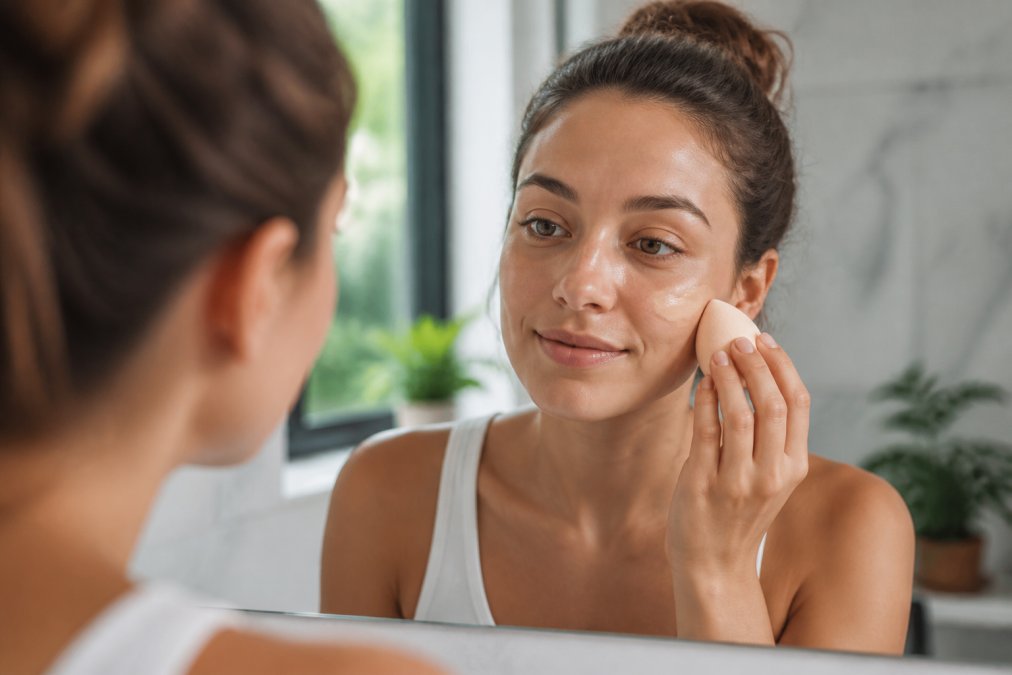
- Damp sponge: Sheers out the formula and presses it into skin, giving the lightest, most skin-like finish. Best for dry or mature skin and for anyone chasing a "no-makeup" look.
- Cushion puff: Delivers a thin, even layer with buildable control. Best for combination and oily skin because it does not over-saturate.
- Fingers: Warmth from your hands melts the formula so it blends quickly. Best for cream and stick formats.
- Dense brush: Picks up the most product and lays it down thickest. This is the tool that turns a lightweight formula cakey, so reserve it for spot work, not full-face.
Cost-per-wear matters more than sticker price
A cushion compact that lasts six weeks of daily use and a bottle that lasts six months are not comparable at face value. Divide price by the number of wears you actually get.
The options worth considering
Air Cushion BB Cream Foundation with High Coverage Concealer ($41.00) uses a mushroom-head applicator for effortless blending and buildable coverage in a breathable formula. Best for anyone who wants medium coverage that still feels light.
How to choose between them
- If your main concern is redness or dullness and your skin is otherwise clear, start with a skin tint or BB cream.
- If you need to cover blemishes or dark circles, pair a tint with a color-correcting concealer rather than reaching for a heavier base.
- If you live in a humid climate or have oily skin, prioritize matte or waterproof cushions and set only the T-zone.
- If you have dry or mature skin, prioritize hydrating BB creams and apply with a damp sponge.
- If you want the fewest steps, a 4-in-1 formula or a cushion with a built-in applicator cuts your routine down.
Choosing the Right Formula for Your Skin Type
Matching formula to skin type matters more than chasing the "best" product on any list. A dewy BB cream that looks luminous on dry skin turns greasy on oily skin by lunch. A matte cushion that controls shine beautifully on combination skin can emphasize flakes on dry patches. The mechanism behind that is simple: your skin's oil and water balance determines whether a formula's emollients sit on the surface or absorb, and whether its film-formers grip or slide.

Read the ingredient list, not just the finish label
Most guides stop at "dewy vs. matte." The ingredients are what actually determine how a lightweight formula behaves on your skin:
- Niacinamide: Supports the skin barrier and helps even tone over time. Common in BB and CC creams because it lets the formula deliver less pigment.
Common Mistakes When Switching from Heavy Foundation
The biggest mistake is applying a lightweight formula with the same technique and quantity you used for full coverage. Skin tints and BB creams aren't designed to be slathered on. They're designed to be built up in thin layers, which is why the finish looks so different from heavy foundation.
Other mistakes that cause a cakey appearance:
- Using a dense brush meant for full coverage instead of fingers, a sponge, or a cushion puff
- Setting the whole face with powder when only the T-zone needs it
- Skipping skin prep, which makes any formula cling to dry patches
- Applying concealer before foundation instead of after
- Expecting one layer to cover everything, then piling on more and causing oxidization
Conclusion
Switching off heavy foundation is a technique change as much as a product change. The best alternatives to heavy full coverage foundation work because they let your skin show through while still evening out tone, and they only succeed if you apply them in thin, buildable layers.
Frequently Asked Questions
What is the best foundation if I hate the feeling of heavy makeup?
Look for lightweight, breathable formulas like BB creams, skin tints, or air cushion foundations. These products provide buildable coverage without the weight of traditional full-coverage foundations. For example, a moisturizing air cushion foundation offers a fresh, non-greasy feel while still concealing imperfections and evening out skin tone.
How can I get full coverage without using heavy foundation?
Use a lightweight base like a skin tint or BB cream and then spot conceal only where needed. A creamy concealer can cover blemishes and dark circles without layering product all over your face. This targeted approach keeps your overall look natural and breathable while still achieving coverage.
Are tinted moisturizers or BB creams better than full coverage foundation?
It depends on your priorities. Tinted moisturizers and BB creams are better for a natural, hydrated finish and daily wear. Full coverage foundation is better for special events or when you need to conceal significant discoloration. Many people prefer BB creams for everyday use because they offer skincare benefits and a skin-like texture.
What are the best lightweight alternatives for acne-prone skin?
Non-comedogenic, oil-free formulas are your best bet. Look for air cushion foundations or BB creams labeled as non-comedogenic and dermatologist-tested. These products won't clog pores and often contain soothing ingredients. Always check that the formula is suitable for sensitive or acne-prone skin before purchasing.
How do I apply concealer for spot coverage?
Apply a small dot of creamy concealer directly onto the blemish or dark spot. Use a small brush or your ring finger to tap and blend the edges outward. Avoid rubbing, which can wipe away coverage. Set with a light dusting of translucent powder if needed. This technique keeps the rest of your face looking fresh and natural.