

Best Vegan Makeup for Sensitive Skin: 2026 Guide
Table of Contents
- What to Look for in Vegan Makeup for Sensitive Skin
- Ingredients to Avoid for Sensitive Skin
- How to Patch Test Makeup for Sensitive Skin
- Non-Comedogenic Vegan Foundation: What the Label Really Means
- Best Vegan Makeup for Sensitive Skin: Tools That Make a Difference
- Prepping Sensitive Skin Before Makeup Application
- Budget-Friendly vs. Luxury Vegan Makeup: What You Actually Get
- Conclusion
Last Updated: August 16, 2026
Sensitive skin and makeup have always had a complicated relationship. The wrong formula can trigger redness, clogged pores, or a full-blown flare-up within hours. The good news: the best vegan makeup for sensitive skin has improved dramatically, and knowing what to look for makes all the difference between a product that soothes and one that sabotages your skin barrier.
At Cosmetikly, we've put together this guide to cut through the noise. Below, you'll find exactly which label claims matter, which ingredients to avoid, and how the right tools can protect reactive skin just as much as the formulas themselves.
| Topic | What It Covers | Why It Matters for Sensitive Skin |
|---|---|---|
| Label claims | Hypoallergenic, non-comedogenic, fragrance-free | Filters out common irritants |
| Ingredients to avoid | Parabens, synthetic dyes, talc | Prevents inflammation and breakouts |
| Patch testing | Step-by-step protocol | Catches reactions before full application |
| Application tools | Brushes, sponges, silicone | Reduces friction and bacterial transfer |
| Makeup removal | Gentle methods, reusable pads | Protects the skin barrier overnight |
| Skin prep | Barrier-supporting routine | Creates a stable base for all-day wear |
What to Look for in Vegan Makeup for Sensitive Skin
The biggest mistake people with reactive skin make is assuming "vegan" automatically means safe. Vegan formulas exclude animal-derived ingredients, but that says nothing about synthetic dyes, preservatives, or fragrance compounds that are among the most common irritants for sensitive skin types.
The labels that genuinely matter are fragrance-free, paraben-free, and hypoallergenic. Fragrance is the single most documented contact allergen in cosmetics, according to American Contact Dermatitis Society resources on fragrance allergy. A product can be entirely plant-based and still contain essential oil blends or "natural fragrance" that trigger the same inflammatory response as synthetic perfume.
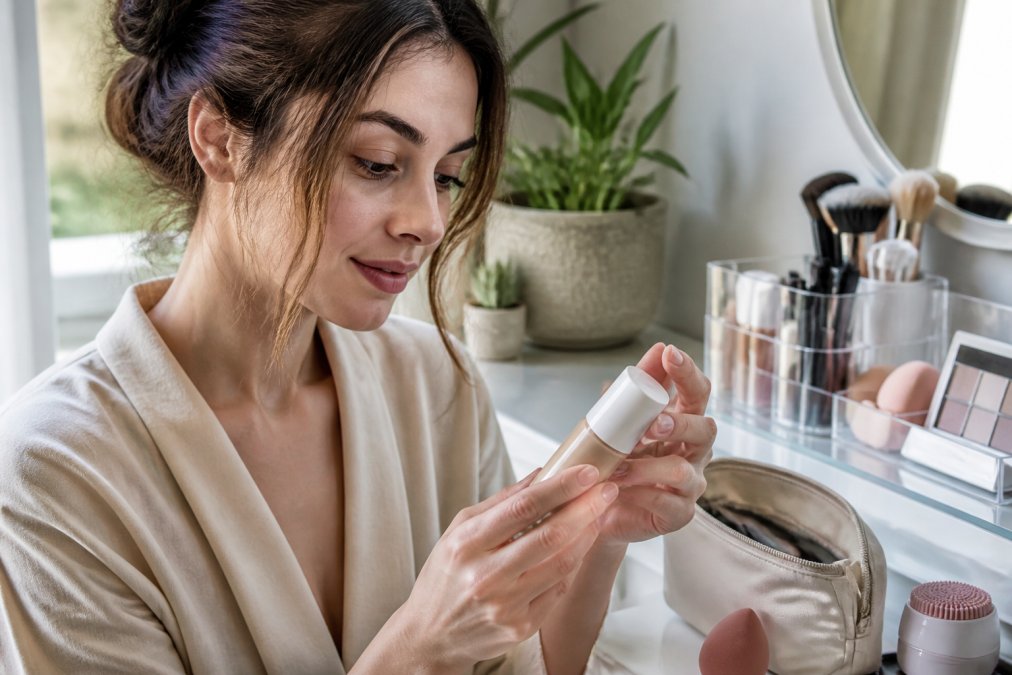
Look for formulas described as dermatologist-tested, since this signals at minimum that a product has been evaluated for skin compatibility. Breathable formula construction matters too: heavy occlusive layers trap heat and sebum, which is particularly problematic for acne-prone or rosacea-friendly needs.
Clean Beauty Labels That Actually Matter
Not all clean beauty certifications carry equal weight:
- Fragrance-free: The gold standard for reactive skin. Distinct from "unscented," which can still contain masking fragrances.
- Hypoallergenic: Not regulated by the FDA, but reputable brands use it to mean formulated without the most common allergens.
- Cruelty-free: Confirms no animal testing, but does not address formula safety for sensitive skin on its own.
- Organic certification: Relevant when it covers the percentage of active ingredients. A product with 1% organic content is not meaningfully "organic."
- Paraben-free: Parabens are preservatives linked to skin sensitivity in some individuals. Check that alternative preservatives are also low-irritant.
Cross-referencing ingredient lists with resources like EWG's Skin Deep cosmetics database gives you a clearer picture of what's actually in a formula.
Mineral-Based vs. Plant-Based Formulas
Mineral-based makeup uses inorganic compounds such as zinc oxide and titanium dioxide as pigmentation and coverage agents. These sit on top of the skin rather than absorbing into it, making them well-tolerated by most reactive skin types. They're naturally non-comedogenic and rosacea-friendly.
Plant-based formulas rely on botanical extracts and soothing botanicals like chamomile and aloe for both coverage and skin benefit. The upside is genuine skin-first beauty with active ingredients that hydrate and calm. The downside is that some botanical extracts, particularly citrus-derived ones, are among the more common vegan irritants. Mineral-based tends to be the safer default for highly reactive skin.
Ingredients to Avoid for Sensitive Skin
The foundational rule for ingredients to avoid for sensitive skin is to prioritize fragrance compounds, certain preservatives, and occlusive agents that block pores.
Common Vegan Irritants You Might Not Expect
These ingredients are entirely animal-free and appear in many clean beauty products, but they're frequent triggers for reactive skin:
- Essential oils: Rose, lavender, peppermint, and citrus oils contain volatile compounds that irritate sensitive and acne-prone skin. "Natural fragrance" often means essential oil blends.
- Witch hazel: Common in toners and setting sprays. The alcohol content can strip the skin barrier, particularly for dry or eczema-prone types.
- Coconut oil and coconut-derived ingredients: Highly comedogenic and consistently problematic for acne-prone skin.
- Synthetic dyes (CI numbers): Vegan but frequently irritating. CI 19140 (Yellow 5) and CI 16035 (Red 40) are common offenders in lip and eye products.
- Talc: Some talc-free formulas replace it with cornstarch, which can feed Malassezia (a yeast associated with fungal acne).
- High-concentration niacinamide: Generally beneficial, but concentrations above a certain threshold cause flushing in some individuals, particularly those with rosacea.
How to Patch Test Makeup for Sensitive Skin
A proper patch test for makeup works like this:
- Choose the right location. The inner forearm is standard, but for face products, the area behind the ear or along the jawline is more representative of facial skin sensitivity.
- Apply a small amount. Use the same quantity you'd apply in normal use. A dot the size of a pea is sufficient.
- Leave it undisturbed for 24 hours. Do not wash the area.
- Assess at 24 hours and again at 48 hours. Immediate reactions suggest irritant contact dermatitis. Delayed reactions at 48-72 hours suggest allergic contact dermatitis.
- Look for redness, itching, swelling, or small bumps. Any of these signals incompatibility. No reaction at 48 hours is a reasonable green light for full application.
- Test new products one at a time. Introducing multiple products simultaneously makes it impossible to identify which one caused a reaction.
Non-Comedogenic Vegan Foundation: What the Label Really Means
Non-comedogenic describes products formulated to avoid blocking pores, which reduces the risk of blackheads and acne breakouts. It's one of the most important labels for acne-prone and combination skin types.
Here's the key point: "non-comedogenic" is not an FDA-regulated claim. There is no standardized test that a product must pass to use the term. Brands self-certify, which means the label reflects the brand's internal testing protocol, not a universal standard.
That said, the claim is still useful. Reputable brands that use it typically formulate without high-comedogenicity ingredients like coconut oil, isopropyl myristate, and wheat germ oil. Use the non-comedogenic label as a filter, then cross-check the ingredient list for known pore-cloggers.
For a non-comedogenic vegan foundation that actually performs, look for:
- Silicone-free options if you're prone to milia (small white cysts under the skin)
- Lightweight, water-based formulas rather than oil-heavy ones
- Mineral pigments (zinc oxide, iron oxides) for coverage without pore-blocking risk
- Breathable formula construction that allows normal sebum regulation
Best Vegan Makeup for Sensitive Skin: Tools That Make a Difference
The formula in your foundation matters. The tool you use to apply it matters just as much. Dirty brushes transfer bacteria directly onto reactive skin. Rough sponges create micro-abrasions that compromise the skin barrier.
Brushes and Applicators for Reactive Skin
Synthetic brushes are the clear choice for sensitive and acne-prone skin. High-quality synthetic fibers apply product with less friction, pick up less bacteria over time, and are easier to clean thoroughly.
The Cosmetikly Ultra-Soft Makeup Brush Set for Eyes and Face ($43.00) is built from man-made fibers that are gentle enough for reactive skin while delivering the precision needed for a no-makeup look or a full complexion build. The set includes brushes for foundation, eyeshadow, blush, and lips.
Explore our premium makeup tools and accessories →

For daily cleansing before and after makeup, the Cosmetikly Facial Brush with Bamboo Handle ($38.00) uses extra-soft bamboo fibers that clean without stripping.

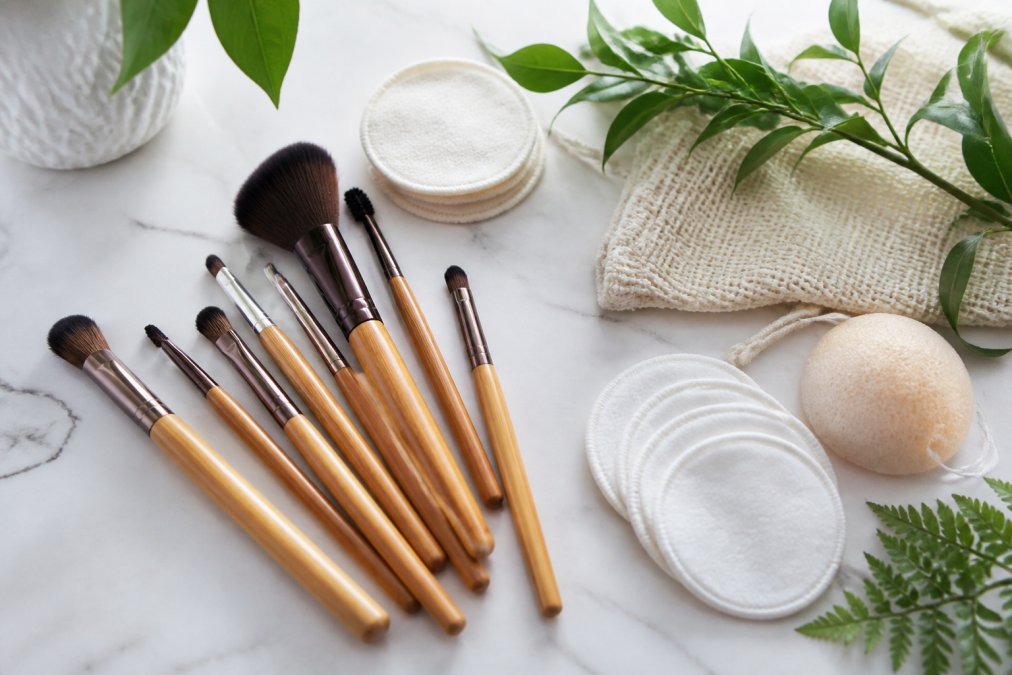
Brush hygiene is non-negotiable for sensitive skin. The Cosmetikly Antibacterial Makeup Brush Cleaner ($22.99) removes product residue and bacteria efficiently, which prevents the bacterial buildup that causes breakouts in reactive skin. Clean your brushes at least once a week if you use them daily.
Gentle Makeup Removal for Sensitive Skin
Makeup removal for sensitive skin is where most routines fall apart. Aggressive scrubbing, alcohol-based wipes, or harsh micellar formulas all compromise the skin barrier.
The most effective approach combines a gentle first cleanse with a soft, non-abrasive pad:
- Reusable pads over disposable cotton: The Cosmetikly Velvet Bamboo Fiber Makeup Remover Pads Set ($29.00) uses a velvet layer over bamboo fiber for a softer contact surface. The set includes a washing bag for easy cleaning between uses.
- Biodegradable wipes for travel: The Cosmetikly Makeup Remover Wipes ($10.99) are formulated for all skin types including sensitive skin, infused with moisturizing agents to replenish the skin's natural moisture barrier.
- Silicone cleansing tools: The Cosmetikly Double-Sided Silicone Facial Cleansing Brush ($26.00) provides a deep, gentle clean without the abrasion of bristle-based tools. Silicone is naturally antibacterial and easy to rinse clean between uses.
Prepping Sensitive Skin Before Makeup Application
A common mistake is applying makeup directly over unprepped skin and wondering why it oxidizes, cakes, or triggers a reaction by midday. The skin barrier needs to be stable and hydrated before any product goes on.

A practical pre-makeup routine for sensitive skin follows this sequence:
- Cleanse gently. Use lukewarm water and a fragrance-free, low-pH cleanser. Hot water dilates capillaries and worsens redness in rosacea-prone skin.
- Apply a hydrating, fragrance-free toner or essence. This restores the skin's moisture balance after cleansing.
- Layer a lightweight, non-comedogenic moisturizer. Allow it to absorb for at least two minutes before applying any base product.
- Apply SPF if it's not in your foundation. Mineral SPF (zinc oxide-based) is the better choice for reactive skin.
- Prime strategically. Silicone-free primers work best for acne-prone skin. Look for soothing botanicals like centella asiatica or green tea extract.
- Apply foundation with a clean, synthetic brush. Start at the center of the face and blend outward with light pressure.
This sequence supports the skin barrier rather than working against it.
Budget-Friendly vs. Luxury Vegan Makeup: What You Actually Get
Price does not reliably predict formula safety for sensitive skin. Many luxury formulas contain fragrance and synthetic dyes as part of their sensory experience, while some budget-friendly options are genuinely fragrance-free and dermatologist-tested.
What price does tend to predict is pigmentation quality, long-wear performance, and the concentration of active soothing botanicals. Luxury foundations often deliver more even coverage in fewer layers, which means less product on the skin and, paradoxically, less irritation risk from repeated application.
The practical framework for reactive skin shoppers:
| Price Point | What You're Paying For | Sensitive Skin Consideration |
|---|---|---|
| Budget (under $20) | Basic coverage, accessible ingredients | Check for fragrance and synthetic dyes carefully |
| Mid-range ($20-$45) | Better pigmentation, some active ingredients | Most dermatologist-tested options land here |
| Luxury ($45+) | Sensory experience, prestige packaging | Does not guarantee irritation-free formula |
Mid-range products with clear ingredient transparency and dermatologist-tested claims represent the best value for sensitive skin. For tools and accessories, investing in quality makes a clearer difference than it does with formulas. A well-made synthetic brush set used consistently and cleaned regularly will outperform cheap applicators.
Prepping Your Routine: A Sensitive Skin Checklist
Before committing to any new vegan makeup product or tool, run through this checklist:
- Is the product fragrance-free (not just "unscented")?
- Does the ingredient list avoid known irritants: essential oils, synthetic dyes, coconut oil derivatives?
- Is it labeled hypoallergenic or dermatologist-tested?
- Have you patch tested for 48 hours before full application?
- Are your application brushes clean and made from synthetic fibers?
- Is your removal routine gentle enough to protect the skin barrier overnight?
- Have you introduced only one new product at a time?
Reactive skin responds best to consistent routines, clean tools, and formulas built with irritation-free principles from the ground up. For deeper guidance on cosmetic ingredient safety, the FDA's overview of cosmetic ingredient safety is the most authoritative starting point for understanding how ingredients are regulated.
Cosmetikly's dermatologist-approved tools, including the Ultra-Soft Makeup Brush Set, Velvet Bamboo Fiber Remover Pads, and Antibacterial Brush Cleaner, are designed specifically to support sensitive skin routines without compromise. Explore our premium makeup tools and accessories to build a complete, reactive-skin-safe regimen from application to removal.
Frequently Asked Questions
Is vegan makeup always safe for sensitive skin?
Not automatically. Vegan makeup for sensitive skin means no animal-derived ingredients, but a formula can still contain synthetic dyes, artificial fragrances, or harsh preservatives that trigger inflammation on reactive skin. Always check for fragrance-free and paraben-free claims, and look for products labeled hypoallergenic or dermatologist-tested. Patch testing every new product before full application is the most reliable way to confirm it won't irritate your skin barrier.
What ingredients should sensitive skin avoid in vegan cosmetics?
The main offenders in vegan formulas include synthetic fragrances, alcohol (denat.), talc, artificial dyes (listed as FD&C or D&C colors), and certain essential oils like peppermint or eucalyptus. Even naturally derived ingredients like tea tree oil or citrus extracts can cause irritation on rosacea-prone or acne-prone skin. Silicone-free and paraben-free formulas are generally gentler. Scan ingredient lists for these before buying, not just the front-of-pack claims.
How do I patch test new makeup if my skin is reactive?
Apply a small amount of the product to the inside of your wrist or behind your ear. Leave it on for 24 hours without washing. If you see redness, swelling, or feel itching, the formula is likely incompatible with your skin. For eye makeup, test near the jawline rather than close to the eye. Repeat for 48 hours if your skin is especially reactive. Patch testing is especially important when switching to a new non-comedogenic vegan foundation or trying a new cruelty-free mascara.
What does non-comedogenic mean on a vegan foundation?
Non-comedogenic means the formula is designed not to block pores, which reduces the risk of breakouts on acne-prone skin. For a vegan foundation, this typically means it avoids heavy plant oils like coconut oil or cocoa butter that score high on the comedogenic scale. Instead, look for lightweight, breathable formulas with ingredients like jojoba oil or aloe vera. The FDA does not regulate the term, so pair it with a fragrance-free and dermatologist-tested claim for greater confidence.
Does the application tool matter when using vegan makeup on sensitive skin?
Yes, significantly. Dirty brushes harbor bacteria that cause inflammation and breakouts, regardless of how clean your formula is. Synthetic or ultra-soft bristle brushes reduce friction on reactive skin compared to rough applicators. Cleaning brushes regularly with an antibacterial brush cleaner removes product buildup that can irritate the skin barrier over time. Using gentle, reusable makeup remover pads instead of rough disposable wipes also reduces mechanical irritation at the end of the day.
This article was written using GrandRanker