

Skincare Ingredients for Mature Skin: 2026 Guide
Table of Contents
- Why Skincare Ingredients for Mature Skin Work Differently
-
The Core Skincare Ingredients Every Mature Skin Routine Needs
- Retinoids and Retinol for Cellular Turnover
- Vitamin C for Brightening and Collagen Synthesis
- Peptides and Niacinamide for Elasticity and Barrier Repair
- Hyaluronic Acid, Ceramides, and Squalane for Deep Hydration
- Chemical Exfoliants: AHAs and BHAs for Skin Texture
- SPF and Antioxidants Against Photoaging and Free Radicals
- Retinol vs Bakuchiol for Aging Skin: Which One Is Right for You?
- How to Build a Skincare Routine for Mature Skin Step by Step
- Ingredient Layering, Contraindications, and Hormonal Skin Changes
- Skincare Ingredients to Avoid After 50
- Budget-Friendly vs. Luxury Formulations: What Actually Matters
- Conclusion
Last Updated: August 15, 2026
Why Skincare Ingredients for Mature Skin Work Differently
Mature skin undergoes measurable structural changes: collagen production slows, the lipid barrier thins, cellular turnover decelerates, and trans-epidermal water loss increases. These shifts mean ingredients effective for younger skin may be ineffective or irritating for mature skin. This guide aims to help you focus on skincare ingredients for mature skin that genuinely deliver results.
The core challenge is this: mature skin is simultaneously more vulnerable and more demanding. It needs active ingredients to stimulate the dermis and epidermis, while also requiring gentler delivery systems to avoid compromising an already fragile barrier. Hormonal changes, particularly the decline in estrogen after menopause, accelerate collagen loss and reduce natural moisture retention. Understanding this distinction is the starting point for building a routine that actually works.
The Core Skincare Ingredients Every Mature Skin Routine Needs
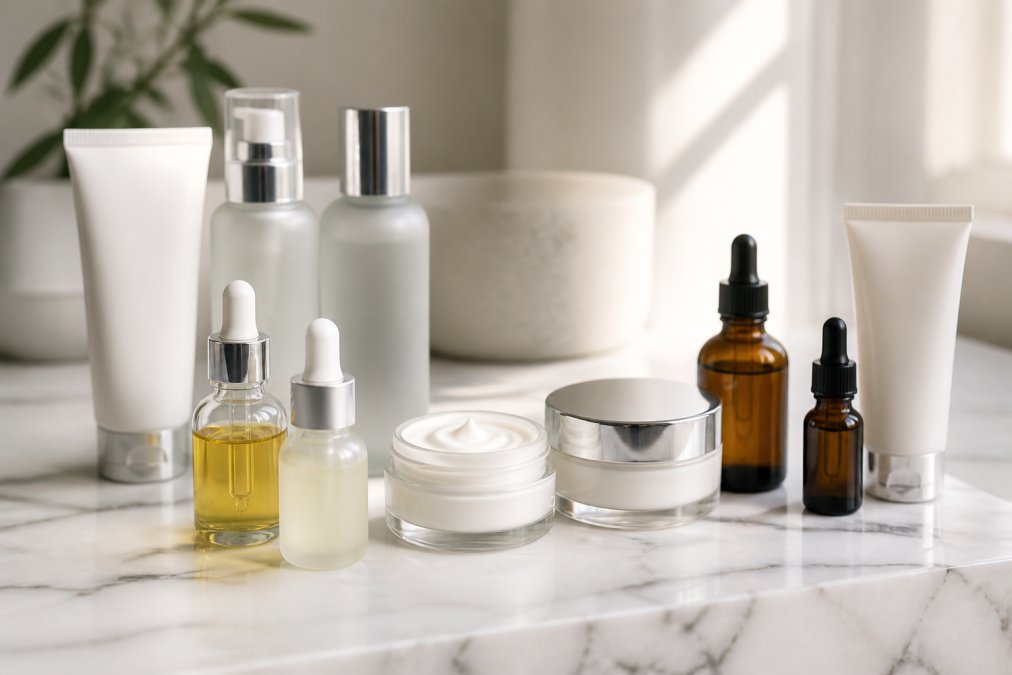
The most effective approach to mature skincare is selecting the right active ingredients and understanding what each does at a cellular level.
Retinoids and Retinol for Cellular Turnover
Retinoids are the most well-studied anti-aging topicals available without a prescription. Retinol converts to retinoic acid in the skin and directly stimulates cellular turnover and collagen synthesis. According to American Academy of Dermatology guidance on retinoids, retinoids are among the most evidence-backed topical ingredients for addressing photoaging and hyperpigmentation.
For mature skin, start with low concentration applied two to three nights per week, building frequency gradually. Pair retinol with a ceramide-rich moisturizer to prevent barrier compromise.
Pros: Stimulates collagen, speeds cellular turnover, reduces hyperpigmentation Cons: Initial irritation, dryness, not suitable for daily use at first
Vitamin C for Brightening and Collagen Synthesis
Vitamin C as L-ascorbic acid neutralizes free radicals and directly supports collagen synthesis. For mature skin showing sun spots and loss of firmness, a stable vitamin C serum addresses multiple concerns simultaneously.
Concentration matters: 10-15% is most effective for daily use without causing sensitivity. Stability is critical, ascorbic acid oxidizes quickly, so opaque or airless packaging is essential.
Pros: Brightening, antioxidant protection, supports collagen, morning-use friendly Cons: Unstable in poor packaging, can sting on sensitized skin
Peptides and Niacinamide for Elasticity and Barrier Repair
Peptides signal the skin to produce more collagen and elastin without causing irritation, making them ideal for mature skin that cannot tolerate stronger actives nightly. Copper peptides support the dermal matrix and improve elasticity over time.
Niacinamide (vitamin B3) reinforces the skin barrier by boosting ceramide production, reduces pore appearance, calms inflammation, and brightens tone. For mature skin experiencing redness or barrier disruption, niacinamide is an excellent complementary ingredient that layers well with almost everything.
Pros: Peptides rebuild structure; niacinamide repairs barrier and calms inflammation Cons: Peptides require consistent long-term use; results are gradual
Hyaluronic Acid, Ceramides, and Squalane for Deep Hydration
Hydration is structural for mature skin. Hyaluronic acid draws moisture into the epidermis, holding many times its weight in water. Applied to damp skin and sealed with a moisturizer, it visibly plumps fine lines within hours.
Ceramides form the structural "mortar" between skin cells. As ceramide levels decline with age, the barrier becomes porous and prone to trans-epidermal water loss. Topical ceramides restore this function. Squalane, a plant-derived emollient, mimics natural sebum and provides lightweight occlusion without clogging pores. Combining these three covers all hydration layers: attract, seal, and protect.
Chemical Exfoliants: AHAs and BHAs for Skin Texture
Physical scrubs are outdated for mature skin. Chemical exfoliants dissolve bonds between dead skin cells without mechanical friction that causes micro-tears in thinning skin.
AHAs such as glycolic and lactic acid improve texture, brighten hyperpigmentation, and stimulate collagen with regular use. Lactic acid is gentler for sensitive or dry mature skin. BHAs, primarily salicylic acid, penetrate pores and are useful for mature skin experiencing congestion. One to two AHA applications per week is sufficient for most people over 50.
SPF and Antioxidants Against Photoaging and Free Radicals
Photoaging accounts for the majority of visible aging signs. Daily broad-spectrum SPF is the single most effective anti-aging step available. As documented in FDA guidance on sunscreen and photoaging, consistent use of broad-spectrum sunscreen with SPF 30 or higher is the most evidence-backed method for preventing further photodamage.
Antioxidants neutralize free radicals that UV light and pollution generate. Layering a vitamin C serum under SPF in the morning creates a two-layer defense against photoaging.
Retinol vs Bakuchiol for Aging Skin: Which One Is Right for You?
Retinol delivers faster, more clinically documented results for collagen stimulation and cellular turnover. It is the stronger option for significant photoaging, deep wrinkles, and persistent hyperpigmentation. The trade-off is an adjustment period of four to eight weeks with dryness, flaking, and sensitivity.
Explore our premium makeup tools and accessories →
Bakuchiol is a plant-derived compound that mimics retinol's mechanism without irritation. It suits mature skin too sensitive for retinol, those pregnant or breastfeeding, and anyone wanting a gentler entry point. Results take longer, and impact on deep wrinkles is more modest.
| Feature | Retinol | Bakuchiol |
|---|---|---|
| Collagen stimulation | Strong, well-documented | Moderate, emerging research |
| Irritation risk | Higher, especially initially | Low |
| Speed of results | Faster (8-12 weeks) | Slower (12-16 weeks) |
| Best for | Significant photoaging, wrinkles | Sensitive or reactive mature skin |
| Pregnancy safe | No | Generally yes (consult doctor) |
| Use frequency | 2-3x per week initially | Daily |
Retinol is more effective for most people over 50 with established aging signs. Bakuchiol is a legitimate alternative for those who cannot tolerate it.
How to Build a Skincare Routine for Mature Skin Step by Step
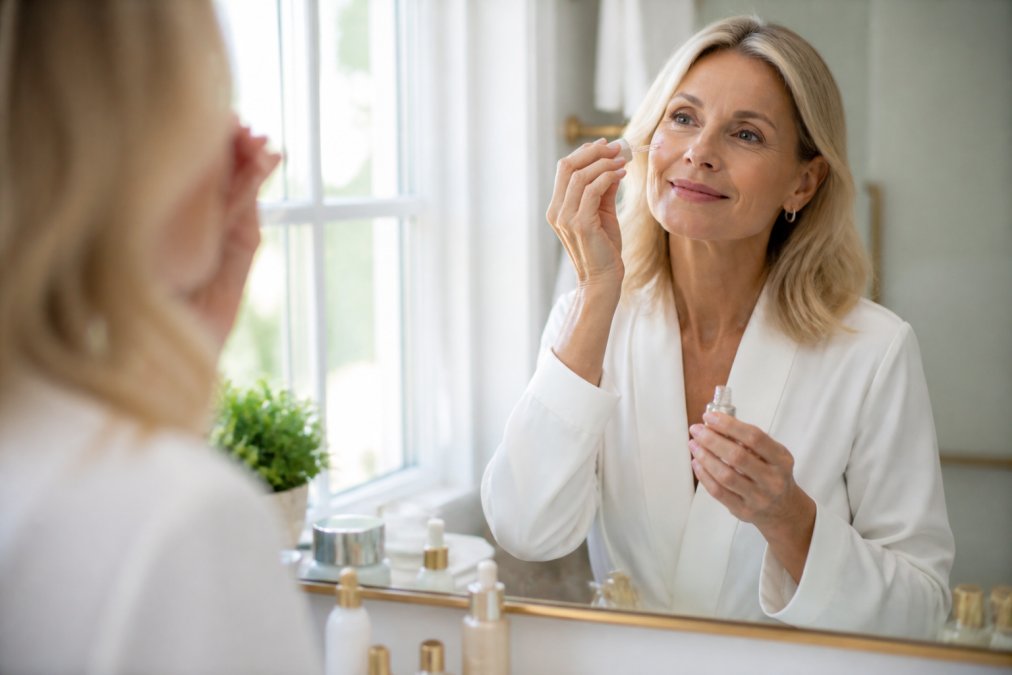
Building a mature skincare routine comes down to sequencing active ingredients correctly and not overloading the skin.
Morning Routine: Protection and Brightness
- Gentle cleanser, Remove overnight residue without stripping the barrier.
- Vitamin C serum (L-ascorbic acid, 10-15%), Apply to damp skin for antioxidant protection and collagen support.
- Hyaluronic acid serum, Layer over vitamin C while skin is still slightly damp.
- Niacinamide moisturizer with ceramides, Seal in hydration and support the lipid barrier.
- Broad-spectrum SPF 30+, Apply as the final step.
Evening Routine: Repair and Renewal
- Oil or balm cleanser, Remove SPF and environmental buildup.
- Water-based cleanser (optional double cleanse), For thorough cleansing.
- Retinol or bakuchiol serum, Apply to dry skin. Start with retinol two nights per week.
- Peptide serum, Layer over retinol to support collagen synthesis and buffer irritation.
- Ceramide and squalane moisturizer, Seal everything in with a rich emollient.
:::pro tip Apply retinol to fully dry skin, waiting 20 minutes after cleansing reduces absorption rate and significantly lowers irritation risk without compromising results. :::
Ingredient Layering, Contraindications, and Hormonal Skin Changes
Do not use together in the same application:
- Retinol + vitamin C (use vitamin C in the morning, retinol at night)
- Retinol + AHA/BHA (stacking exfoliating actives causes barrier disruption)
- Vitamin C + niacinamide at high concentrations (can cause temporary flushing)
Safe and synergistic combinations:
- Hyaluronic acid + ceramides + squalane (hydration layering)
- Niacinamide + peptides (barrier repair and collagen support)
- Vitamin C + vitamin E + SPF (antioxidant stack)
Hormonal skin changes deserve specific attention. The decline in estrogen during perimenopause and menopause reduces collagen levels, decreases skin thickness, and alters sebum production. Introduce one new ingredient at a time and observe for two to four weeks before adding another. Many women in this stage find their skin responds better to richer, more occlusive formulations than they needed in their 30s.
Skincare Ingredients to Avoid After 50
- Alcohol-based toners and astringents, Stripping formulas destroy the lipid barrier. Avoid alcohol denat or SD alcohol in the first few ingredients.
- Synthetic fragrances, A leading cause of contact dermatitis in mature skin.
- Harsh physical scrubs, Cause micro-tears in thinning skin. Switch to chemical exfoliants.
- High-concentration benzoyl peroxide, Deeply drying for skin prone to moisture loss.
- Overuse of essential oils, Many are photosensitizing and trigger inflammation.
- Formaldehyde-releasing preservatives, Irritating in any skin type.
Mature skin benefits from simpler, gentler formulas focused on barrier support. Fewer, well-chosen ingredients applied consistently outperform complicated routines that overload the skin.
Budget-Friendly vs. Luxury Formulations: What Actually Matters
Price is not a reliable indicator of efficacy. What determines whether a formula works is the concentration of active ingredients, their stability, and the delivery system. According to National Institutes of Health research on topical retinoid formulations, bioavailability depends significantly on formulation chemistry, not brand positioning.
Where budget-friendly formulas genuinely compete:
- Hyaluronic acid serums (concentration and molecular weight matter more than brand)
- Niacinamide products (well-understood, stable ingredient with many effective affordable options)
- Ceramide moisturizers (barrier-repair formulas don't need to be expensive to be effective)
Where spending more may be justified:
- Vitamin C serums (stability and packaging quality matter enormously)
- Retinol formulations (encapsulated delivery systems reduce irritation while maintaining efficacy)
- SPF products (elegant formulations encourage daily compliance)
| Ingredient | Budget-Friendly? | Where Quality Matters |
|---|---|---|
| Hyaluronic acid | Yes | Molecular weight variety |
| Niacinamide | Yes | Concentration (5-10%) |
| Ceramides | Yes | Formulation complexity |
| Vitamin C (ascorbic acid) | Invest more | Stability and packaging |
| Retinol | Invest more | Encapsulation technology |
| SPF | Invest more | Wearability for daily use |
Research the ingredient list, not the price tag. A formula with the right actives at effective concentrations in stable packaging outperforms premium products with vague marketing language.
Mature skin has specific, well-understood needs: collagen stimulation, barrier repair, deep hydration, and consistent photoprotection. The challenge is building a routine that delivers these ingredients in the right order, at the right concentrations, without overloading a skin barrier with less resilience than it once had. Cosmetikly offers dermatologist-approved skincare products that combine antioxidant-rich actives, barrier-supporting emollients, and SPF 30 protection in formulas designed for mature skin that demands visible results. Explore our premium skincare and makeup tools to find the right foundation for your routine.
Frequently Asked Questions
What are the best skincare ingredients for mature skin?
The most effective skincare ingredients for mature skin include retinoids for cellular turnover, vitamin C (ascorbic acid) for brightening and collagen production, peptides for elasticity, hyaluronic acid for hydration, niacinamide for barrier repair, ceramides to reduce trans-epidermal water loss, and broad-spectrum SPF to prevent further photoaging. Using a combination of these actives in a consistent routine delivers the most visible improvement in fine lines, skin tone, and firmness over time.
At what age should you start using anti-aging ingredients?
Preventive care can start in your mid-20s. SPF and antioxidants like vitamin C are appropriate from that point forward. Retinoids and peptides are typically introduced in the 30s, when collagen production begins to slow. After 50, the focus shifts to deeper hydration, barrier support with ceramides and squalane, and gentler exfoliation. There is no single right age, the condition of your skin matters more than the number.
Which skincare ingredients should be avoided for mature skin?
Mature skin benefits from avoiding high-alcohol formulas, which strip the lipid barrier and worsen dryness. Synthetic fragrances and harsh sulfates can trigger inflammation and sensitivity. Very high concentrations of AHAs used too frequently can compromise the skin barrier rather than improve it. After 50, overly aggressive physical scrubs are also worth skipping, as the dermis becomes thinner and more prone to micro-tears. Patch-testing any new active ingredient remains important at every age.
What is the difference between retinol and bakuchiol for aging skin?
Retinol is a vitamin A derivative with decades of clinical research showing it accelerates cellular turnover, reduces hyperpigmentation, and stimulates collagen synthesis. Bakuchiol is a plant-based alternative that some studies suggest mimics retinol's firming and brightening effects with less irritation. Retinol remains the gold standard for anti-aging results, but bakuchiol is a practical option for those with sensitive skin or who are pregnant and advised to avoid retinoids. Both can improve skin texture and fine lines with consistent use.
How do you build a skincare routine for mature skin?
A routine for mature skin typically follows four steps morning and evening: cleanse gently, apply a targeted serum (vitamin C in the morning, retinoid or peptide serum at night), follow with a moisturizer containing ceramides or hyaluronic acid, and finish the morning routine with broad-spectrum SPF 30 or higher. Start with one active ingredient at a time to monitor skin sensitivity, and introduce retinoids gradually, two nights per week before building to nightly use.
What do dermatologists recommend for mature skin care?
Dermatologists consistently recommend retinoids as the most evidence-backed topical for reducing fine lines and improving skin texture. Broad-spectrum sunscreen is considered non-negotiable to prevent further photodamage. Humectants like hyaluronic acid combined with emollients like ceramides and squalane help maintain moisture retention. Many dermatologists also highlight niacinamide for its anti-inflammatory properties and peptides for supporting the dermal matrix without the irritation risk that some actives carry.
This article was written using GrandRanker