

BB Cream vs Foundation: Key Differences Explained
Table of Contents
- BB Cream vs Foundation: The Difference Between These Base Products
- What BB Cream Is
- What Foundation Is
- BB Cream vs Foundation Coverage: Sheer, Medium, or Full
- Formula, Texture, and Skincare Benefits
- BB Cream vs Foundation for Everyday Use
- BB Cream vs Tinted Moisturizer: Where BB Fits
- How to Apply BB Cream for a Natural Finish
- Matching Coverage to Skin Type and Occasion
- Frequently Asked Questions
Last Updated: October 6, 2026
BB Cream vs Foundation: The Difference Between These Base Products
The difference between BB cream and foundation comes down to one trade-off: BB cream gives you light, skincare-boosted coverage in a single step, while foundation delivers buildable, full-coverage pigment that lasts longer. Neither is "better." They solve different problems.

At Cosmetikly, we hear this question constantly from customers who want one product that does everything. It doesn't exist, but the right pick for your skin type and morning routine gets close.
What BB Cream Is
BB cream, short for beauty balm or blemish balm, is a lightweight tinted cream that combines moisturizer, light coverage, and often SPF in one product. It blurs redness and uneven tone without masking your skin.

The finish tends to be dewy or natural rather than matte. Coverage is sheer to light, and it's buildable to a point. Think of it as your skincare step and your base step merged into one.
What Foundation Is
Foundation is a pigmented complexion product built for coverage first. It comes in liquid, cream, powder, and cushion formats, with finishes ranging from matte to radiant and coverage from sheer to full.
Unlike BB cream, foundation isn't designed to hydrate or treat your skin. It's designed to even out your complexion, conceal blemishes and redness, and hold its finish for hours. Some modern formulas add skincare ingredients, but coverage remains the job.
BB Cream vs Foundation Coverage: Sheer, Medium, or Full
Coverage is where bb cream vs foundation coverage diverges most sharply. BB cream sits at sheer to light. Foundation spans the entire range, and you choose your level.
| Coverage Level | BB Cream | Foundation |
|---|---|---|
| Sheer | Typical | Available |
| Light to medium | Buildable | Available |
| Full | Rare | Common |
| Best for | Even tone, no-makeup look | Concealing blemishes, redness |
If you want to hide acne, dark spots, or scarring, foundation wins. If you want to look like you have good skin rather than good makeup, BB cream is the better fit.
Formula, Texture, and Skincare Benefits
Formula is the second real divider. BB cream is built on a moisturizing base, so it feels like a tinted lotion going on. Foundation is built on pigment and film-formers, so it feels like makeup.
That difference shows up in texture. BB creams tend to be thinner, more fluid, and blend with fingertips alone. Foundations range from watery serums to thick creams and powders, and many benefit from a brush or sponge.
Moisturizing and Hydration
Hydration is BB cream's home turf. Most BB creams include moisturizing and antioxidant-rich ingredients, which is why they suit dry and mature skin especially well. Foundation can be hydrating too, but you usually need to pick a formula labeled for dry skin to get there.
One practical note: if your skin is very dry, apply your regular moisturizer first, then BB cream. The BB cream's hydration is a bonus, not a replacement for your skincare routine.
BB Cream vs Foundation for Everyday Use
For everyday use, BB cream usually wins. It applies in under a minute, feels breathable, and doesn't demand careful blending or setting. Most people can wear it to the office, the school run, or a casual lunch without touch-ups.
Foundation earns its place for longer days, photos, events, and anything where you need your base to hold. It offers more control over finish and coverage, which matters when the stakes are higher.
The honest trade-off: BB cream is faster and lighter, foundation is more durable and more controllable. Pick based on the day, not a single "best" answer.
BB Cream vs Tinted Moisturizer: Where BB Fits
BB cream sits between tinted moisturizer and foundation on the coverage spectrum. Tinted moisturizer offers the least pigment, BB cream adds light coverage and often SPF, and foundation delivers the most coverage and control.
If tinted moisturizer feels too sheer and foundation feels too heavy, BB cream is the middle ground you're looking for. Many people keep all three and rotate by occasion.
How to Apply BB Cream for a Natural Finish
Apply BB cream after moisturizer and sunscreen, using a small amount and building in thin layers. Most people use too much at once, which is the fastest way to a cakey finish.
BB Cream Air Cushion Foundation Concealer Makeup Cosmetics →
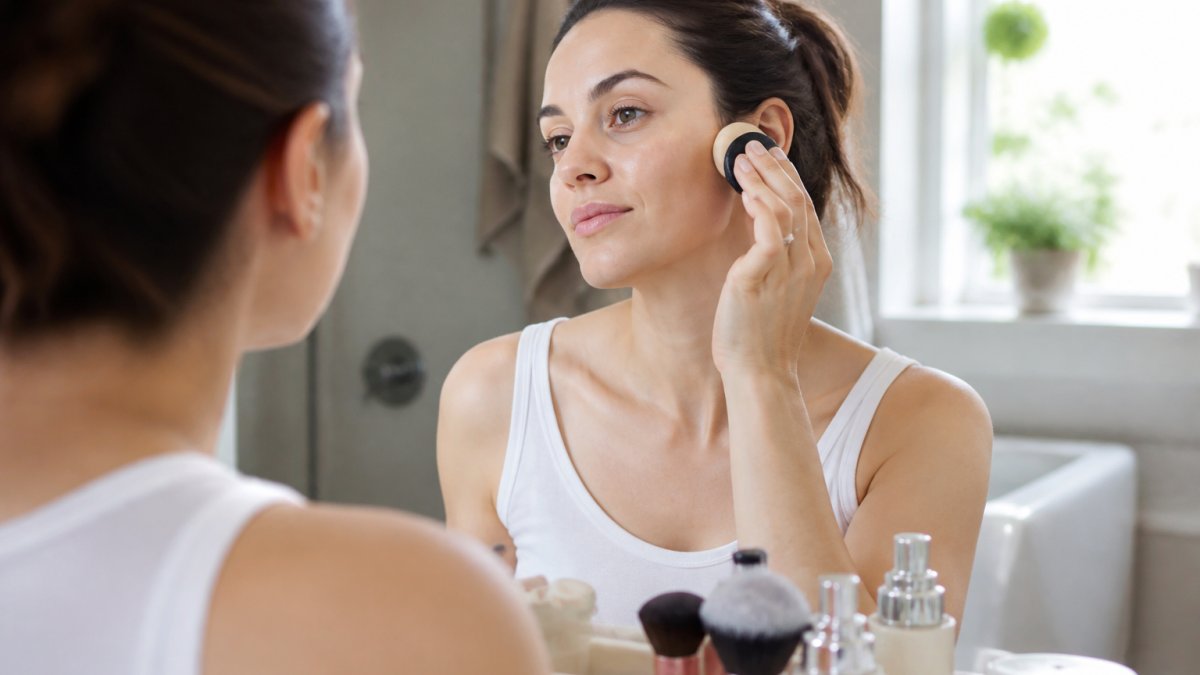
The correct order: skincare, then sunscreen, then BB cream
This is the step most guides gloss over, and it matters more than technique.
- Cleanse and moisturize. Let moisturizer settle for a minute or two so it doesn't pill under the BB cream.
- Apply dedicated sunscreen. Use about a nickel-sized amount for your face and neck, roughly the two-finger length most dermatologists describe. Wait two to three minutes for it to set.
- Apply BB cream on top. The SPF in your BB cream is a bonus, not your primary protection. Layering this way means you get real sun protection and the tinted finish you want.
If your sunscreen and BB cream pill or separate when layered, the usual culprit is a silicone-heavy BB cream over a water-based sunscreen (or the reverse). Match the base: water-based sunscreen under water-based BB cream, silicone-based under silicone-based.
How much product to use
Start with a pea-sized amount for your whole face, about the size of a single almond. That's less than most people instinctively squeeze out. You can always add a second thin layer where you need it; you can't take product away once it's on.
For a cushion compact, one press of the puff typically picks up enough for one cheek. Press once per section rather than pumping the puff repeatedly, which overloads the cushion and wastes product.
Tools: fingers, sponge, or brush
Each tool gives a different finish, and the choice is not cosmetic, it changes how the product sits.
- Fingertips: fastest, and body heat helps the formula melt into skin. Best for sheer, natural coverage. Downside is uneven blending around the nose and hairline.
- Damp sponge: gives the most seamless, skin-like finish and sheers out coverage slightly. Best for dry or textured skin. Use it damp, not wet, and bounce rather than drag.
- Dense brush: builds coverage fastest and works best for medium to full looks. Use a stippling motion, not sweeping, to avoid streaks.
- Cushion applicator: the mushroom-head puff presses product directly onto the skin, which is why it suits BB cream so well. It's the fastest route to an even, natural finish.
Here's the routine we recommend:
- Start with clean, moisturized skin. Let your moisturizer settle for a minute.
- Apply sunscreen and let it set for two to three minutes.
- Dot a pea-sized amount of BB cream on forehead, cheeks, and chin, or press from a cushion compact.
- Blend outward with fingertips, a damp sponge, or a dense brush.
- Press, don't swipe, around the nose and under the eyes.
- Add a second thin layer only where you need more coverage.
- Set with a light dusting of powder only if your skin is oily.
A cushion applicator makes step three faster and more even. Our BB Cream Air Cushion Foundation Concealer Makeup Cosmetics uses a mushroom-head applicator that presses product directly onto the skin, which suits this technique well.
Matching Coverage to Skin Type and Occasion
Match coverage to your skin type first, then to the occasion, then to your shade. Most guides stop at the first two steps. The third is where people actually get stuck, so we'll cover it here.
Start with skin type
- Dry and mature skin: a hydrating BB cream or a radiant-finish foundation. Look for glycerin, hyaluronic acid, or squalane near the top of the ingredient list.
- Oily and combination skin: oil-controlling formulas with a natural or matte finish. Silicone-based foundations tend to hold up better through the day than water-based ones on oily skin.
- Sensitive or acne-prone skin: fragrance-free and labeled non-comedogenic. Patch-test on your jawline for two or three days before committing to a full face.
Then match the occasion
- Errands and workdays: BB cream, sheer to light coverage, natural finish.
- Dinner or date night: foundation, medium coverage, natural to dewy finish.
- Photos and events: foundation, medium to full coverage, matte or satin. Avoid heavy SPF in the formula here, titanium dioxide and zinc oxide can flash back white in photos.
- Gym or travel: BB cream with SPF, reapplied as needed. Skip anything labeled long-wear if you'll be sweating; it can clog pores when mixed with sweat.
Find your shade: undertone, depth, and oxidation
Shade matching is where BB cream and foundation diverge most in practice, and it's the step most guides skip.
Undertone comes before depth. Undertone is the underlying hue of your skin, cool (pink or red), warm (yellow, peach, or gold), or neutral (a balance of both).
Test in daylight. Store lighting is warm and will make almost any shade look passable. Step outside or stand near a window before you commit.
Mix to adjust. If your BB cream is slightly too light or too warm, you can blend it with a drop of foundation or a shade-adjusting pigment drop.
If you want one product that covers both light and moderate days, a buildable cushion foundation is the most flexible option. Our Air Cushion BB Cream Foundation with High Coverage Concealer is designed for that middle ground.
Frequently Asked Questions
Is BB cream the same as foundation?
No. BB cream, short for beauty balm or blemish balm, is a lighter, skincare-leaning product that evens tone with sheer to medium coverage. Foundation is a dedicated complexion product built for higher coverage and longer wear. A BB cream like Cosmetikly's Air Cushion BB Cream Foundation ($41) sits between skincare and makeup, while a matte foundation such as the Matte Finish Waterproof Concealer Foundation ($35) is designed for full coverage and all-day hold.
Does BB cream provide as much coverage as foundation?
BB cream typically delivers sheer to medium, buildable coverage, enough to blur redness and uneven tone but not to hide deep blemishes or dark spots. Foundation ranges from medium to full coverage. If you want a natural finish for workdays, BB cream usually wins. If you need to conceal acne, scarring, or hyperpigmentation, a full-coverage foundation performs better. You can also layer concealer over BB cream to spot-correct without switching products.
Can you use BB cream instead of foundation every day?
Yes, daily use is fine, especially for a lightweight, breathable formula. BB creams with moisturizing and SPF properties suit everyday wear for most skin types. If you have sensitive skin, patch test first, since daily wear means your skin is in constant contact with the formula.
Should you apply moisturizer or primer before BB cream or foundation?
Apply moisturizer first, then primer if you want longer wear or a smoother base. Wait about a minute between layers so each product sets. For BB cream, a primer is optional because the formula already contains moisturizing ingredients. For foundation, primer helps control oil and prevents patchiness by lunchtime, particularly for combination or oily skin. Sunscreen goes on before makeup unless your BB cream already includes SPF.
What is the difference between BB cream and tinted moisturizer?
Tinted moisturizer is essentially moisturizer with a hint of color, offering the lightest coverage and a dewy finish. BB cream adds more coverage plus skincare ingredients like antioxidants or brightening agents, so it sits one step above tinted moisturizer on the coverage scale. If you want barely-there color, choose a tinted moisturizer. If you want to even out tone while still looking natural, a BB cream like Cosmetikly's Mushroom Infused Air Cushion BB Cream ($52) is the better fit.