

Best Cruelty-Free Foundation 2026: Top Picks
Table of Contents
- What Makes a Foundation Truly Cruelty-Free
- Cruelty-Free Drugstore Foundation: Affordable Options
- Best Foundation for Mature Skin That's Cruelty-Free
- Liquid vs. Powder vs. Cream Foundations: Which Works Best
- Finding Your Perfect Shade and Coverage Level
- Key Certifications and How to Verify Ethical Claims
- Conclusion
Last Updated: August 18, 2026
What Makes a Foundation Truly Cruelty-Free
A cruelty-free foundation is formulated and manufactured without any animal testing at any stage of production. The distinction between cruelty-free and vegan is critical: cruelty-free means no animal testing, while vegan means the formula contains no animal-derived ingredients. A foundation can be cruelty-free but still contain beeswax or carmine (crushed beetles).
Third-party certifications provide the most reliable verification. The Leaping Bunny logo indicates the brand has been audited by an independent organization and commits to ongoing monitoring. Another trusted certification is PETA's Beauty Without Bunnies program, though Leaping Bunny carries more rigorous requirements.
When evaluating a cruelty-free foundation, examine three key factors: certification status, ingredient sourcing, and parent company ownership. A foundation labeled "cruelty-free" without third-party backing is essentially self-regulation. Ingredients matter too; some brands source from suppliers who may test on animals upstream.
Cruelty-Free Drugstore Foundation: Affordable Options
Affordable cruelty-free foundation options have expanded significantly, making ethical beauty accessible without premium pricing. Several drugstore brands have earned Leaping Bunny certification and offer foundations under $15 with buildable coverage and long-wear formulas, particularly for combination or oily skin.
When shopping drugstore cruelty-free foundation, verify the certification status on the brand's website or through Leaping Bunny's official directory. Look for non-comedogenic formulations if you have congestion-prone skin, and check for SPF protection, which many drugstore options now include.
Application technique matters at the drugstore price point. Using a damp beauty sponge or professional-grade brush creates a seamless finish. Drugstore foundations benefit from a setting powder to extend wear time and control shine throughout the day. The Glo Skin Beauty Loose Matte Finishing Powder available at Cosmetikly works exceptionally well, offering oil-absorbing technology that keeps foundation in place while maintaining a breathable, natural finish.

Best Foundation for Mature Skin That's Cruelty-Free
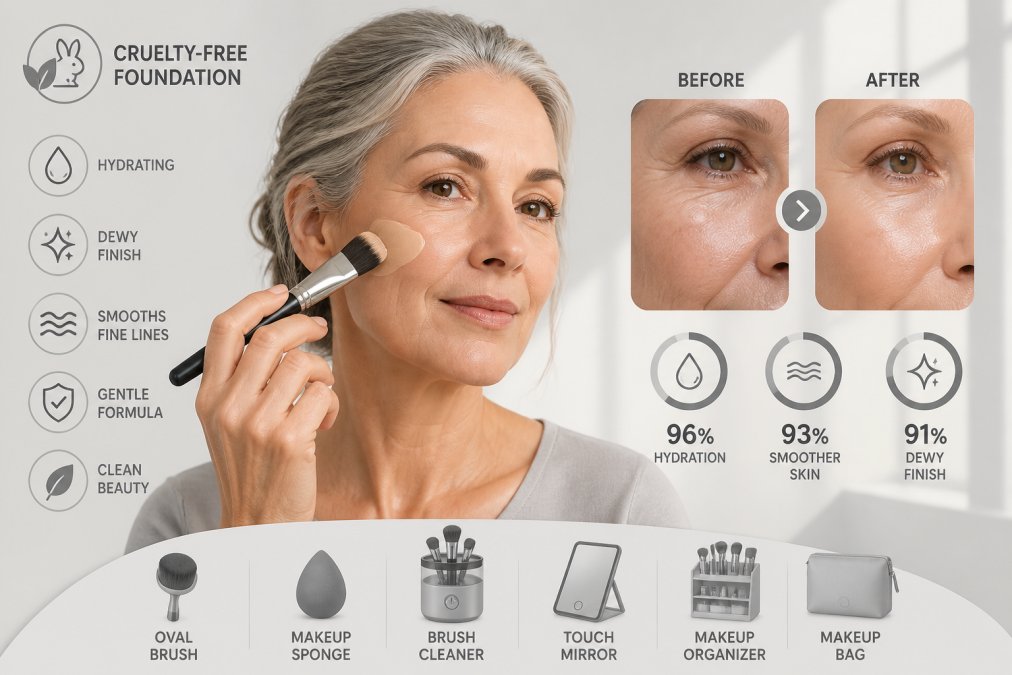
Mature skin requires hydrating foundations that smooth fine lines without settling into creases. The best cruelty-free foundation for mature skin prioritizes moisture retention, luminosity, and buildable coverage. Foundations formulated with hyaluronic acid, glycerin, and peptides work best for this demographic.
Medium-coverage foundations with a dewy or natural finish work better than full-coverage matte formulas, which can accentuate lines. Dewy glow formulas reflect light subtly, minimizing the appearance of fine lines and creating a more youthful complexion.
Ingredient transparency matters for mature skin, which often has sensitivity or reactive tendencies. Paraben-free, sulfate-free formulations reduce irritation risk. Antioxidant-rich ingredients like vitamin E, green tea extract, and resveratrol provide anti-aging benefits beyond coverage.
A damp beauty sponge creates a lighter, more natural-looking finish than brushes alone. The Women's Flat Makeup Brush with Bamboo Handle from Cosmetikly offers an eco-friendly option with soft bristles that blend seamlessly without tugging. Mature skin benefits from primer use; a hydrating primer fills fine lines and creates a smooth canvas that prevents foundation from settling into creases.

Undertone matching becomes more nuanced with age. Mature skin often develops complex undertones due to sun exposure and natural pigmentation changes. Many cruelty-free brands now offer expanded shade ranges with specific undertone descriptions. Prioritize brands that acknowledge undertone complexity rather than offering generic "deep" shades.
Liquid vs. Powder vs. Cream Foundations: Which Works Best
Foundation formulation type determines coverage capacity, longevity, and suitability for different skin types.
Liquid foundations provide the most versatility and buildable coverage. Starting with sheer coverage, liquid formulas can be layered to achieve medium or full coverage without appearing heavy. They work across all skin types when matched to your specific needs and integrate seamlessly into skin, creating a natural finish. The trade-off is longer application time compared to powder or cream formats.
Powder foundations offer speed and portability. Applied with a brush or sponge, they provide instant coverage and control shine immediately. They excel for oily and combination skin because the powder format absorbs excess sebum. The trade-off is coverage limitation; powder foundations typically max out at medium coverage and can appear patchy if over-applied.
Cream foundations balance coverage and natural appearance. Thicker than liquid but more blendable than powder, cream formulas provide medium-to-full coverage with a satin or dewy finish. They work particularly well for mature and dry skin. Disadvantages include potential for creasing in warm climates and difficulty blending without proper technique.
For most users, liquid foundation offers the best balance of versatility and performance. However, your choice should match your lifestyle and skin type.
| Foundation Type | Best For | Coverage Range | Wear Time | Application Speed |
|---|---|---|---|---|
| Liquid | All skin types, natural finish | Sheer to full | 8-12 hours | 5-10 minutes |
| Powder | Oily/combination skin, touch-ups | Sheer to medium | 6-10 hours | 2-3 minutes |
| Cream | Mature/dry skin, full coverage | Medium to full | 6-8 hours | 5-8 minutes |
Finding Your Perfect Shade and Coverage Level
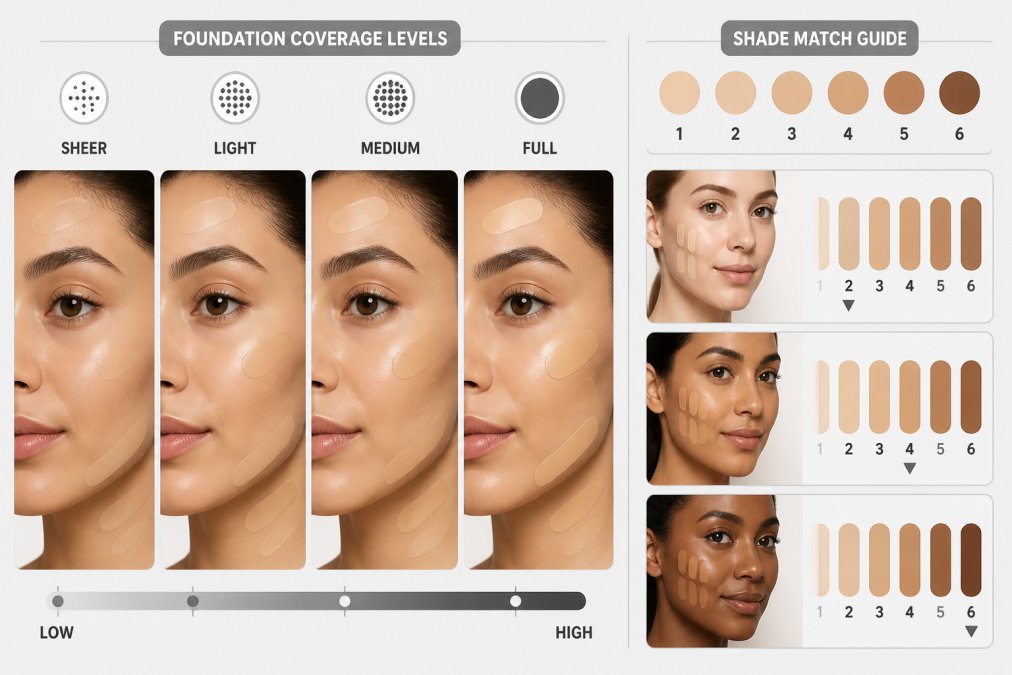
Shade matching represents the most critical step in foundation selection. Undertone, the underlying color beneath your skin's surface, matters more than depth. Undertones fall into three categories: warm (golden or peachy), neutral (balanced), and cool (pink or red).
Explore our premium makeup tools and accessories →
Test foundation on your jawline in natural daylight, not under fluorescent store lighting. Apply a small amount and blend downward; the correct shade disappears into your skin without creating a visible line. If the foundation appears orange, you've chosen a shade too warm. If it appears ashy or gray, you've selected one too cool.
Coverage level describes how much of your skin imperfections the foundation conceals. Sheer coverage lets skin texture show through while evening out tone. Medium coverage conceals minor blemishes and hyperpigmentation while maintaining skin texture visibility. Full coverage masks significant blemishes, scars, and uneven tone completely.
For deep skin tones, traditional warm/neutral/cool categories often fail to capture the full spectrum. Deep skin tones frequently have multiple undertones simultaneously. Many cruelty-free brands now offer expanded shade ranges with specific undertone descriptions. Prioritize brands that acknowledge undertone complexity rather than offering generic "deep" shades.
Climate and lifestyle affect coverage needs. Those in humid climates benefit from oil-control formulas and longer-wear foundations. Those in dry climates need hydrating formulas that don't emphasize texture.
Key Certifications and How to Verify Ethical Claims
Third-party certification provides the only reliable verification of cruelty-free status. Understanding certification types helps you distinguish genuine ethical practices from marketing rhetoric.
Leaping Bunny certification represents the most rigorous animal welfare standard. Administered by the Coalition for Consumer Information on Cosmetics, it requires brands to maintain detailed records, use approved ingredient suppliers, and submit to regular audits. The certification covers the entire supply chain, not just finished products.
PETA Beauty Without Bunnies certification offers another recognized standard, though with less rigorous requirements than Leaping Bunny. PETA's program certifies brands based on stated policies but doesn't conduct ongoing audits.
Vegan certification from organizations like Vegan Action confirms that products contain no animal-derived ingredients. Vegan certification does NOT guarantee cruelty-free status; a vegan product could come from a parent company that tests on animals.
To verify claims, visit the certifying organization's official directory rather than relying on brand websites. The Leaping Bunny website maintains a searchable database of certified brands. These official sources prevent brands from falsely claiming certifications they haven't earned.
Parent company ownership requires separate verification. A brand might be cruelty-free, but if its parent company tests on animals, your purchase indirectly funds animal testing. Supply chain transparency demonstrates genuine commitment. Brands providing ingredient sourcing information, supplier lists, and manufacturing location details show confidence in their ethical practices.
Leaping Bunny certified brand directory provides the most comprehensive verification resource. PETA Beauty Without Bunnies certified brands offers an alternative certification check. According to the Federal Trade Commission's Guides Concerning Use of Endorsements and Testimonials, brands making unsubstantiated ethical claims face regulatory scrutiny.
Finding the best cruelty-free foundation requires balancing ethical values with performance expectations. The expansion of certified cruelty-free options means you no longer sacrifice coverage, longevity, or shade range for ethical principles. Cosmetikly's curated selection features professional-grade foundations that deliver dermatologist-approved results while maintaining rigorous cruelty-free standards. Explore our premium foundation collection and discover formulas that enhance your confidence while supporting your ethical values. With 30-day trials and free delivery on purchases over $99, testing cruelty-free foundations has never been more accessible.
Frequently Asked Questions
How can I verify if a foundation brand is truly cruelty-free?
Look for third-party certifications from organizations like Leaping Bunny, PETA, or Choose Cruelty-Free. These verify that the brand doesn't test on animals and doesn't source from suppliers that do. Check the brand's website for transparency about their supply chain. Avoid brands that claim cruelty-free but lack certification, as self-regulation varies. Many cruelty-free brands also display certification logos on packaging and in product descriptions.
What's the difference between vegan and cruelty-free foundation?
Cruelty-free means the product wasn't tested on animals, but it may contain animal-derived ingredients like beeswax or lanolin. Vegan foundation contains no animal ingredients at all. A foundation can be cruelty-free without being vegan, or vegan without being cruelty-free. For ethically-minded shoppers, look for products labeled both vegan and cruelty-free to align with conscious consumerism values.
What's the best cruelty-free foundation for sensitive, acne-prone skin?
Choose non-comedogenic, hypoallergenic foundations with paraben-free and sulfate-free formulas. Look for breathable formulas that won't clog pores. Dermatologist-tested options are ideal for congested skin. Serum foundations or lightweight, buildable coverage formulas minimize irritation while providing medium coverage. Avoid synthetic fragrance and opt for clean beauty ingredients. Test on a small area first, and consider the 30-day trial period many brands offer to ensure compatibility with your skin.
Do cruelty-free foundations perform as well as luxury brands?
Yes. Many certified cruelty-free foundations deliver professional-grade performance with long-wear, breathable formulas that match or exceed luxury options. The difference lies in ingredient transparency and ethical sourcing, not quality. Cruelty-free brands often invest in skin-tech innovations like pore-blurring, anti-aging properties, and oil-control technology. Performance depends on formula type and your skin type, not certification status. Test coverage and finish to find what works best for you.
This article was written using GrandRanker