

How to Improve Skin Texture Naturally: 2026 Guide
Table of Contents
- Causes of Bumpy Skin Texture You Should Know
- Best Natural Exfoliants for Face Skin
- How to Improve Skin Texture with Daily Hydration
- Key Ingredients That Smooth Uneven Skin Texture
- Cleansing Habits and Sun Protection That Improve Skin Texture Naturally
- Lifestyle and Dietary Habits That Support Smoother Skin
- How Long to Fix Skin Texture: Realistic Timelines
- Conclusion
Last Updated: August 17, 2026
Uneven skin texture is one of the most common concerns dermatologists hear about, yet most guides reduce the fix to "exfoliate more and drink water." At Cosmetikly, we know the reality is more nuanced. Bumpy patches, enlarged pores, rough surfaces, and dullness each have distinct causes, and the right approach depends on which ones you're actually dealing with. Below, we break down exactly what's driving your texture issues and give you a practical, ingredient-level plan to address them naturally.
Causes of Bumpy Skin Texture You Should Know
Uneven skin texture is any variation in the skin's surface smoothness, including rough patches, bumps, enlarged pores, and acne scarring. Understanding the root cause is the most important step before choosing any treatment.
The most frequent culprits include:
- Buildup of dead skin cells that haven't shed properly, leaving the surface rough and dull
- Congested pores filled with excess sebum, debris, or oxidized oil
- Post-inflammatory changes from past breakouts that leave the skin surface uneven
- Loss of collagen production with age, which reduces skin elasticity and plumpness
- Chronic dehydration, which makes fine texture irregularities look more pronounced
- Sun damage, which breaks down collagen and creates an uneven skin surface over time
Hormonal Fluctuations and the Menstrual Cycle
Hormones are a major driver of skin texture changes most guides overlook. Estrogen levels peak around ovulation and support collagen production, hydration, and skin smoothness. In the luteal phase (the two weeks before your period), progesterone rises, increasing sebum production and pore congestion. Many people notice their skin feels rougher or more congested during this window.
Tracking your cycle alongside your skin helps you anticipate these shifts. During the luteal phase, scaling back heavy moisturizers and adding a gentle salicylic acid or lactic acid step can offset the surge in oil and congestion.
The Psychological Loop: Stress and Skin Picking
Stress elevates cortisol, which increases inflammation, disrupts the skin barrier, and accelerates oil production. But the more underreported issue is what stress triggers behaviorally: skin picking.
Picking at bumps, congestion, or rough patches causes real structural damage. It breaks the skin surface, introduces bacteria, and creates post-inflammatory marks that take weeks to fade. If skin picking is part of your routine, addressing it directly matters as much as any serum. Keeping nails short, using hydrocolloid patches over active spots, and identifying triggers are practical starting points. According to American Academy of Dermatology guidance on skin picking, dermatologist-guided behavioral strategies can significantly reduce skin damage from compulsive picking.
Best Natural Exfoliants for Face Skin
Regular exfoliation is the single most effective way to improve skin texture at home. Dead skin cells accumulate on the surface and create rough, uneven texture that no moisturizer can fully correct. Removing them accelerates cell turnover, brightens dullness, and allows serums and moisturizers to penetrate more effectively.
The best natural exfoliants include lactic acid, derived from milk, which gently dissolves the bonds between dead skin cells while drawing moisture into the skin. Glycolic acid, from sugarcane, penetrates more deeply and is more effective for stubborn texture but can irritate sensitive skin. For physical options, finely milled oat powder and rice bran are gentle enough for daily use.
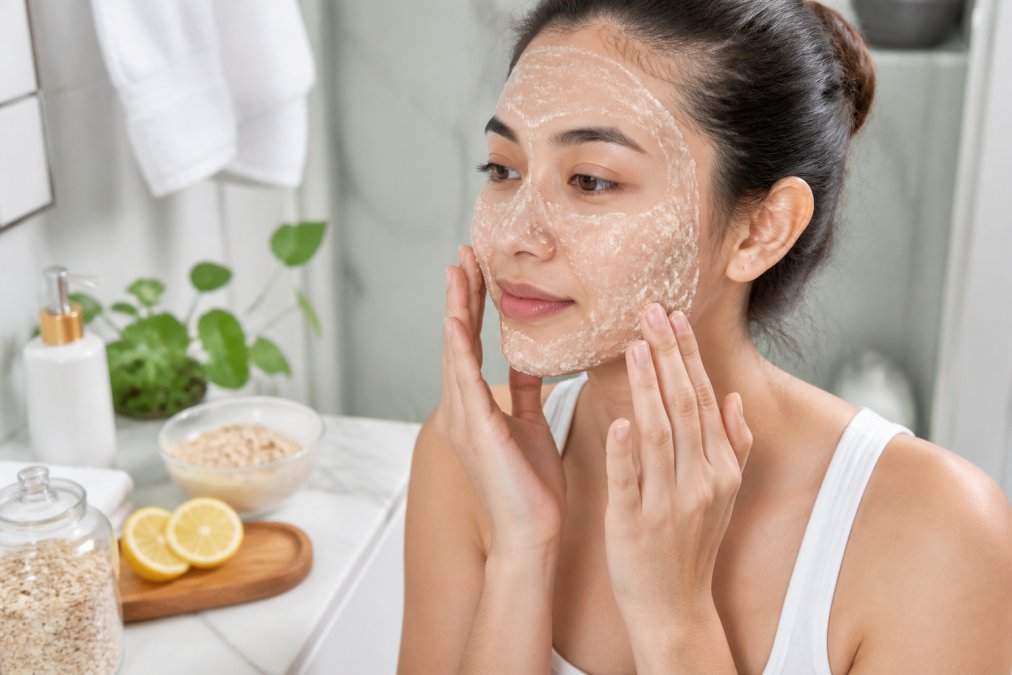
The Cosmetikly Mask Exfoliating Moisturizing combines exfoliation and hydration in a single step, removing dead skin cells while delivering moisture. At $53.00, it is a practical choice for anyone who wants to simplify their routine without sacrificing results.

Chemical vs. Physical Exfoliation: Which to Choose
Chemical exfoliation uses acids or enzymes to dissolve dead skin cells without friction. Physical exfoliation uses abrasive particles or tools to manually buff them away. For most skin types, chemical exfoliation is the better choice because it is more uniform and less likely to cause micro-tears.
| Method | Best For | Frequency | Main Risk |
|---|---|---|---|
| Lactic acid | Sensitive or dry skin | 2-3x per week | Mild irritation if overused |
| Glycolic acid | Oily or thickened skin | 1-2x per week | Sun sensitivity |
| Salicylic acid | Congested, acne-prone skin | 2-3x per week | Dryness |
| Physical (fine grain) | Normal skin, light texture | 1-2x per week | Micro-tears if too abrasive |
| Enzyme (papaya, pineapple) | Sensitive skin | 2-3x per week | Minimal risk |
Physical exfoliation is not off the table, but texture matters. Coarse scrubs cause more harm than good. A silicone cleansing brush with soft bristles, like the Cosmetikly Facial Cleansing Brush with Soft Bristles and Silicone, provides controlled physical exfoliation that is gentle enough for daily use.
How to Improve Skin Texture with Daily Hydration
Hydration refers to water content in the skin cells. Moisturizing refers to sealing that water in with occlusive or emollient ingredients. You need both to improve skin texture meaningfully.
Dehydrated skin looks rough, feels tight, and makes fine lines and pores appear more prominent. The fix starts with a water-based serum or essence containing humectants like hyaluronic acid or glycerin, applied to damp skin. Follow with a moisturizer containing ceramides or fatty acids to lock hydration in place. As noted by National Institutes of Health research on skin hydration, the skin's water content directly affects its mechanical properties, including smoothness and elasticity.
Repairing the Skin Barrier with Ceramides and Niacinamide
The skin barrier is the outermost layer that prevents water loss and blocks environmental irritants. A compromised barrier is behind a large proportion of persistent texture problems, including chronic roughness, sensitivity, and inflammation.
Ceramides are lipids that make up roughly 50% of the skin barrier structure. When ceramide levels drop due to over-exfoliation, harsh cleansers, or environmental damage, the barrier weakens and moisture escapes. Replenishing ceramides through topical products is one of the most evidence-supported approaches to improving skin texture and reducing inflammation.
Niacinamide (vitamin B3) strengthens the barrier, reduces pore appearance, calms redness, and regulates sebum production. It is one of the most versatile ingredients in skincare and is well-tolerated by nearly all skin types.
For congested skin specifically, the Cosmetikly IFAST Blackhead Removal Deep Cleansing Serum supports deep cleansing without stripping the barrier.

Key Ingredients That Smooth Uneven Skin Texture
The most effective topical ingredients work through three main mechanisms: accelerating cell turnover, stimulating collagen production, and reducing inflammation.
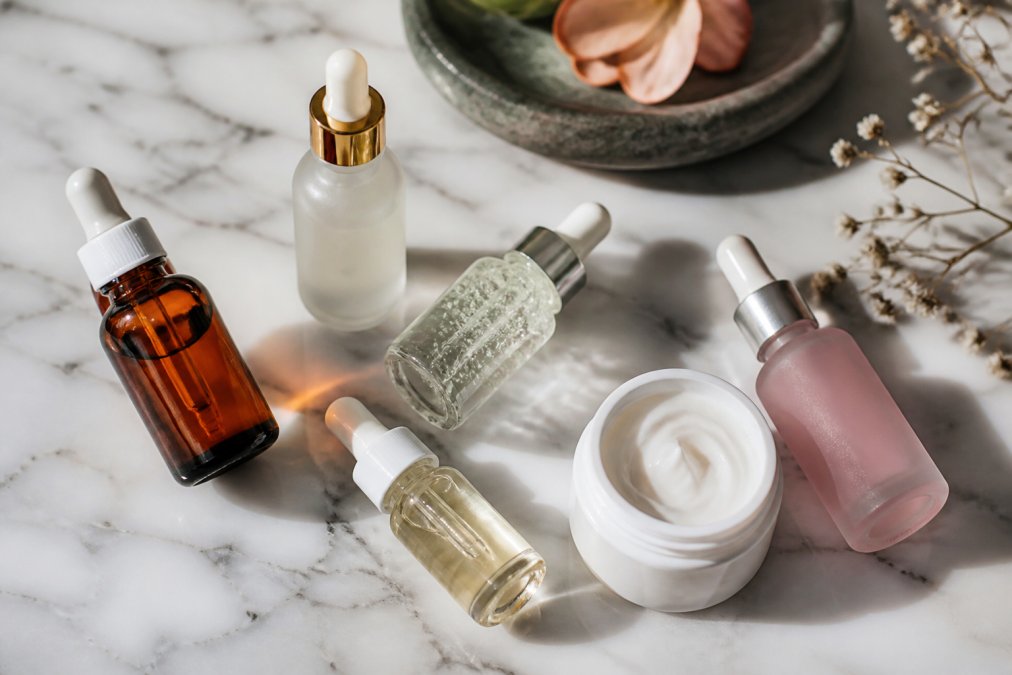
Retinoids and Retinol for Cell Turnover
Retinoids are vitamin A derivatives and the most studied topical ingredient for improving skin texture. They accelerate cell turnover, stimulate collagen production, and reduce the appearance of enlarged pores and acne scarring. Retinol is the over-the-counter form that converts to retinoic acid in the skin. Prescription retinoids like tretinoin are more potent but require a dermatologist's guidance.
Start retinol slowly: once per week, increasing to every other night over several weeks. Always apply SPF the following morning, as retinoids increase photosensitivity. According to American Academy of Dermatology on retinoid use, retinoids are among the most dermatologist-recommended ingredients for long-term skin texture improvement.
Vitamin C, Peptides, and Antioxidants
Vitamin C is a potent antioxidant that brightens uneven skin tone, supports collagen synthesis, and neutralizes free radical damage. L-ascorbic acid is the most active form, but more stable derivatives like ascorbyl glucoside are gentler alternatives.
Peptides are short chains of amino acids that signal the skin to produce more collagen and elastin. They work more slowly than retinoids but are suitable for sensitive skin types. Peptides improve skin elasticity and plumpness over eight to twelve weeks of consistent use.
Explore our premium makeup tools and accessories →
Aloe vera and turmeric are plant-based antioxidants with meaningful anti-inflammatory properties. Aloe vera soothes irritation and supports barrier function. Turmeric contains curcumin, which reduces redness and post-inflammatory discoloration.
Ingredient Layering Conflicts to Avoid
Not every active ingredient plays well with others. Layering incompatible ingredients is a common reason routines fail.
The most important conflicts to avoid:
- Retinol + AHA/BHA acids in the same routine: both increase cell turnover and using them together causes over-exfoliation. Use retinol at night and acids on alternate nights.
- Vitamin C + niacinamide at high concentrations: apply vitamin C in the morning and niacinamide at night.
- Retinol + vitamin C together: both are potent actives that can destabilize each other. Morning vitamin C, evening retinol is the standard split.
- Physical exfoliation + chemical exfoliation on the same day: this doubles the barrier disruption without doubling the benefit.
Cleansing Habits and Sun Protection That Improve Skin Texture Naturally
Cleansing is the foundation of every effective skincare routine, and most people do it wrong in one of two directions: either under-cleansing or over-cleansing with harsh surfactants.
The goal is to remove impurities without disrupting the skin's natural pH or lipid layer. Non-comedogenic, sulfate-free cleansers are the standard recommendation. Double cleansing at night, starting with an oil-based cleanser to dissolve makeup and SPF, followed by a water-based cleanser, is the most thorough approach.
Sun protection is non-negotiable for improving skin texture. UV exposure breaks down collagen, causes post-inflammatory hyperpigmentation to darken, and actively worsens the uneven skin surface you are trying to correct. SPF 30 or higher, applied every morning as the last step of your routine, is the single intervention with the most consistent dermatological support. Mineral sunscreens with zinc oxide are the preferred non-comedogenic option for acne-prone or sensitive skin.
The PoreHalo Stick from Cosmetikly addresses pore minimization as part of a daily prep routine. At $19.99, it is a practical, targeted tool for reducing the appearance of enlarged pores.

Lifestyle and Dietary Habits That Support Smoother Skin
What you eat and how you live affects your skin texture in ways that topical products cannot fully compensate for. Chronic inflammation from diet, poor sleep, or high stress creates a systemic environment that keeps skin rough and congested.
Dietary factors with the strongest evidence for skin health include:
- Omega-3 fatty acids from fatty fish, walnuts, and flaxseed support the skin barrier and reduce inflammation
- Antioxidant-rich foods including berries, leafy greens, and green tea neutralize free radical damage
- Zinc from pumpkin seeds and legumes supports wound healing and regulates sebum production
- Hydration through water and water-rich foods maintains skin plumpness and smoothness
Sleep is when the skin performs most of its repair processes, including collagen synthesis and cell turnover. Consistently poor sleep quality shows up in skin texture, dullness, and barrier function. Prioritizing seven to nine hours is a legitimate skincare strategy.
Smoking and excessive alcohol consumption both accelerate collagen degradation and impair skin hydration. These are among the most significant lifestyle factors behind premature texture loss, according to guidance from National Institute on Aging on skin aging factors.
How Long to Fix Skin Texture: Realistic Timelines
How long it takes to fix skin texture depends on the cause, the consistency of your routine, and how established the problem is. Setting realistic expectations prevents people from abandoning effective routines too early.
General timelines for common texture improvements:
| Concern | Approach | Realistic Timeline |
|---|---|---|
| Surface roughness from dead skin cells | Regular exfoliation + hydration | 2-4 weeks |
| Congested pores | Salicylic acid + deep cleansing | 4-6 weeks |
| Post-acne texture irregularities | Retinol + vitamin C | 8-12 weeks |
| Collagen loss and skin elasticity | Peptides + retinoids | 12-24 weeks |
| Hyperpigmentation from sun damage | Vitamin C + SPF + niacinamide | 8-16 weeks |
| Barrier damage from over-exfoliation | Ceramides + gentle routine | 2-6 weeks |
The most common mistake is switching products before giving them enough time to work. Four weeks is the minimum evaluation window for most topical ingredients. Retinoids and peptides require three to six months of consistent use before their full effect is visible.
Layering too many actives at once in an attempt to speed results typically triggers irritation, which sets the timeline back further. One active ingredient, introduced slowly, produces more reliable improvement than five used simultaneously.
Rough, uneven skin texture is rarely one problem with one fix. The most effective approach addresses the skin barrier first, introduces targeted actives second, and supports the process with consistent cleansing, SPF, and lifestyle habits. Cosmetikly's dermatologist-approved range includes the Mask Exfoliating Moisturizing treatment, the Facial Cleansing Brush with Soft Bristles and Silicone, and the PoreHalo Stick, each formulated to support a complete, non-irritating texture-improvement routine. Explore the full range and get started with Cosmetikly to build a routine that delivers visible, lasting results.
Frequently Asked Questions
What causes textured skin and bumpy skin surface?
Uneven skin texture typically stems from a buildup of dead skin cells, clogged or enlarged pores, acne scarring, and reduced collagen production as you age. Hormonal fluctuations, sun damage, and a compromised skin barrier also contribute. Chronic inflammation from diet, stress, or harsh products can further disrupt cell turnover, leaving skin looking rough and dull rather than smooth and even.
How long does it take to fix skin texture naturally?
Visible improvement in skin texture generally takes four to twelve weeks of consistent effort. Exfoliation and hydration can produce noticeable smoothness within two to four weeks, while ingredients like retinoids and vitamin C typically need six to twelve weeks to meaningfully boost collagen production and cell turnover. Acne scarring and deep textural concerns may take several months of a dedicated skincare routine to show significant change.
Can natural skincare ingredients effectively smooth skin texture?
Yes. Dermatologist-approved natural ingredients such as lactic acid, niacinamide, aloe vera, and turmeric are backed by solid evidence for improving skin texture. Lactic acid gently dissolves dead skin cells, niacinamide tightens enlarged pores and strengthens the skin barrier, and aloe vera reduces inflammation. Pairing these with ceramides for hydration and SPF for sun protection creates a routine that delivers measurable improvements over time.
What are the best natural exfoliants for face skin?
Lactic acid is one of the gentlest and most effective chemical exfoliants for the face, making it suitable for sensitive skin. Enzyme-based exfoliants derived from papaya or pineapple dissolve dead skin cells without physical abrasion. For physical options, finely milled oat powder is non-irritating. Avoid coarse scrubs with large particles, which can cause micro-tears. Exfoliating two to three times per week is enough for most skin types to improve texture without disrupting the skin barrier.
Does the menstrual cycle affect skin texture?
Hormonal shifts throughout the menstrual cycle directly affect skin texture. Estrogen peaks mid-cycle, supporting collagen production, skin elasticity, and plumpness. In the week before menstruation, progesterone rises, increasing oil production and the likelihood of congestion and bumpy texture. Adjusting your skincare routine around these phases, such as adding a gentle exfoliant or clay mask during the luteal phase, can help manage hormonal texture changes.
Are there specific lifestyle habits that contribute to smoother skin?
Consistent sleep, adequate water intake, and a diet rich in antioxidants all support smoother skin over time. Chronic stress elevates cortisol, which breaks down collagen and worsens inflammation, contributing to dullness and uneven texture. Avoiding smoking and limiting alcohol also matter, as both reduce skin elasticity and slow cell turnover. Wearing SPF daily is one of the single most effective habits for preventing sun-related texture damage from accumulating.
This article was written using GrandRanker