

Is Cruelty-Free Makeup More Expensive? 2026 Guide
Table of Contents
- The Real Cost of Cruelty-Free Makeup: What the Numbers Show
- Vegan vs Cruelty-Free Makeup: What's the Difference and Does It Affect Price?
- How to Tell If Makeup Is Cruelty Free: A Shopper's Checklist
- Why Some Ethical Products Cost More (And Why Others Don't)
- Affordable Cruelty-Free Makeup Brands That Deliver Results
- DIY and Natural Alternatives: When They Save Money and When They Don't
- How Mass-Market Acquisition Reshapes Cruelty-Free Pricing
- Conclusion
- Frequently Asked Questions
Last Updated: September 13, 2026
The Real Cost of Cruelty-Free Makeup: What the Numbers Show
Is cruelty free makeup more expensive? Often, no. The perception that ethical beauty carries a higher price tag is partly real, partly marketing, and largely a matter of which products you compare. At Cosmetikly, we hear this question constantly from shoppers deciding whether to switch. The honest answer: some cruelty-free products cost more because of production costs and certification standards, while many others sit at the same price point as conventional drugstore brands.
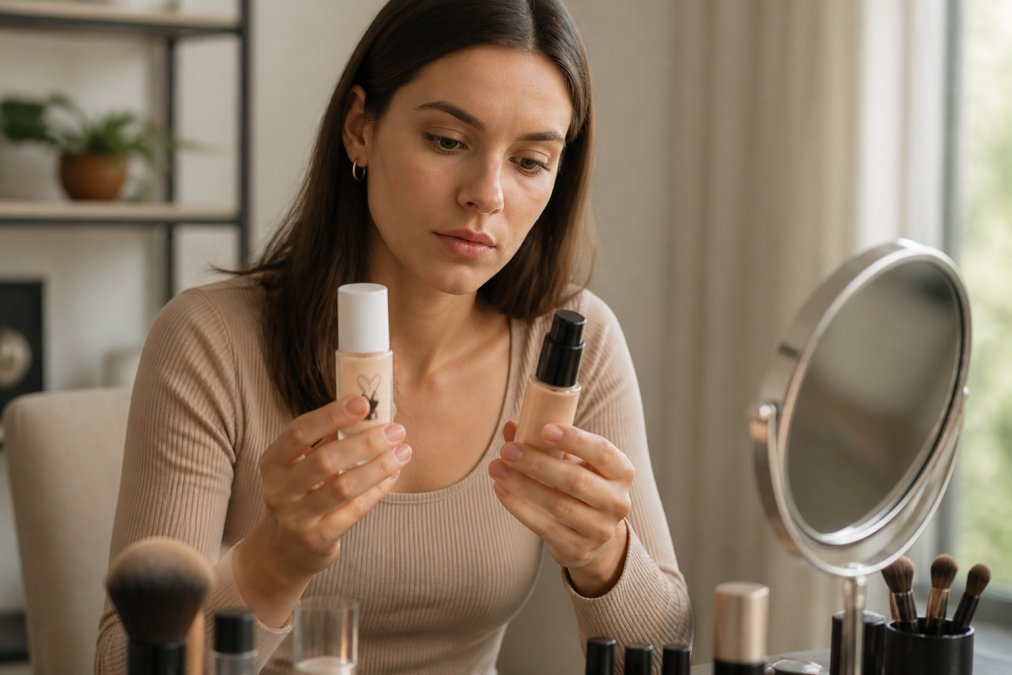
Price-per-Ounce: The Comparison That Actually Matters
A $12 lipstick and a $40 lipstick can cost the same per ounce if the cheaper tube holds a fraction of the product. Price-per-ounce analysis cuts through sticker shock and reveals the real value proposition. A common mistake shoppers make is comparing total price instead of unit cost, which makes affordable cruelty-free makeup brands look pricier than they actually are.
The formula is simple:
- Price per ounce = Total price ÷ Net weight in ounces
- A $24 foundation with 1 oz of product costs $24/oz (consumer.ftc.gov)
- A $15 foundation with 0.5 oz costs $30/oz
Run this calculation across three or four products and the "ethical premium" often shrinks or disappears entirely.
Vegan vs Cruelty-Free Makeup: What's the Difference and Does It Affect Price?
Vegan makeup contains no animal-derived ingredients, while cruelty-free makeup is not tested on animals at any stage of production. A product can be one without the other. A lipstick may skip animal testing but still contain beeswax, which is animal-derived and therefore not vegan.
Does this distinction affect price? Occasionally. Vegan formulations sometimes require reformulation to replace ingredients like carmine or lanolin, which can raise production costs. But many brands achieve both certifications without a significant price increase, and consumer awareness of the difference has pushed more manufacturers toward dual certification as a baseline rather than a premium feature.
How to Tell If Makeup Is Cruelty Free: A Shopper's Checklist
Independent verification matters more than label claims. Many brands state "cruelty-free" on packaging without third-party certification, and regulatory compliance in the cosmetics industry does not require brands to disclose animal testing on labels. Here's a checklist to use before you buy:
- Look for a recognized certification logo (Leaping Bunny, PETA Beauty Without Bunnies)
- Check whether the parent company tests on animals, not just the brand name
- Search the brand on the certification body's official database
- Verify whether the product is sold in markets that legally require animal testing
- Read the ingredient list for animal-derived ingredients if vegan status matters to you
- Confirm the certification covers the specific product line, not just one item
Why Some Ethical Products Cost More (And Why Others Don't)
Production costs explain most of the gap, but the gap is smaller and more specific than the vague 'ethical products cost more' story suggests. Four cost drivers do the heavy lifting, and only one of them is unique to cruelty-free brands.
1. Batch size and minimum order quantities. A contract manufacturer that fills 50,000 units per run can spread setup, cleaning, and QC costs across a huge batch. An indie brand ordering 2,000 units pays the same setup cost divided by 25 times fewer units. That alone can add several dollars per unit before a single ingredient is sourced. This is an economies-of-scale penalty, not an ethics penalty, a conventional indie brand pays it too.
2. Certification audits and supply-chain documentation. Leaping Bunny certification, administered by the Coalition for Consumer Information on Cosmetics, requires an independent audit that traces the brand's entire supply chain down to ingredient suppliers and third-party manufacturers (leapingbunny.org). That means paperwork, site visits, and annual renewal, real overhead a brand without certification never carries. PETA's Beauty Without Bunnies program is a lighter-touch alternative, which is one reason some brands hold that mark instead.
3. Reformulation and ingredient substitution. Replacing carmine (a red pigment derived from cochineal insects) with a vegan alternative, or swapping lanolin for a plant-derived emollient, is not a one-line change. Each substitution triggers stability testing, preservative re-evaluation, and often a new round of compatibility testing. A single reformulation cycle can run into the tens of thousands of dollars, a fixed cost the brand amortizes across every unit it sells.
4. Multi-market regulatory compliance. Some countries legally require animal testing for imported cosmetics. A brand that wants to sell both there and in markets that ban it must either run separate production lines, reformulate for the testing-required market, or exit that market entirely. Each option carries a cost that a brand selling in a single permissive market never faces.
The 'Luxury Tax' vs. the 'Ethical Premium'
Here's where the pricing conversation gets interesting, and where most guides stop short. A luxury tax is what you pay for branding, packaging, celebrity endorsements, and shelf position. An ethical premium is what you pay for certified practices. They are not the same thing, and conflating them is why so many shoppers assume cruelty-free means expensive.
A $90 foundation in a weighted glass case with a magnetic closure may carry the majority of its cost in luxury tax, packaging, marketing spend, retail counter space, and only a small fraction in the audit and sourcing costs that make it genuinely ethical. A $28 drugstore foundation from a certified brand may carry almost no luxury tax but a real, measurable ethical premium in the form of audit fees and smaller batch runs. The first is expensive because of positioning. The second is expensive because of practice.
| Cost Factor | Luxury Tax | Ethical Premium |
|---|---|---|
| Branding and packaging | High | Low |
| Certification audits | None | Moderate |
| Ingredient sourcing | Standard | Certified supply chain |
| Batch size | Large (scale advantage) | Often small (scale penalty) |
| Typical price impact | Large | Small to moderate |
How to Tell Which One You're Paying For
A few signals separate the two. Luxury-tax products tend to spend heavily on packaging weight, unboxing experience, and paid placement in beauty media. Ethical-premium products tend to publish their certification status, name their certifying body, and disclose parent-company ownership. If a brand is loud about its ethics but silent about its certifier, the premium you're paying is probably marketing, not practice.
Run the price-per-ounce math from the section above against both categories. The luxury-tax product usually loses on unit cost. The ethical-premium product often wins, or lands within a dollar or two of the conventional alternative.
Affordable Cruelty-Free Makeup Brands That Deliver Results
Affordable cruelty-free makeup exists at nearly every price point, from drugstore to mid-range. The trick is knowing which tiers carry real certification and which ones use the term as a marketing label. Here's how the market actually breaks down.
Drugstore tier (roughly $5-$15 per unit). This is where the 'cruelty-free is expensive' myth collapses fastest. Several mass-market lines sold at drugstores and big-box retailers carry cruelty-free status and sit at the same price as their conventional neighbors on the shelf. The catch is parent-company ownership: a brand can be cruelty-free while its parent tests on animals elsewhere. Check the parent before you assume the shelf price reflects an ethical premium, often there isn't one.
Mid-range tier (roughly $15-$35 per unit). This is where certification becomes more common and where the ethical premium is most visible. Brands here typically hold Leaping Bunny or Beauty Without Bunnies certification, publish their supply-chain standards, and price within a few dollars of conventional mid-range competitors. The premium is real but small, usually the audit and small-batch costs described above, not a branding markup.
Explore our premium makeup tools and accessories →
Prestige tier (roughly $35+ per unit). At this level, price is driven mostly by luxury tax. Certification may be present, but it's rarely the reason for the price. If you're shopping here for ethics, you're paying for packaging and positioning first and certified practices second.
Where the Value Actually Lives
What most guides miss is that value proposition is not just price. A $42 brush that lasts three years costs less per use than a $12 brush that sheds after six months. Product longevity changes the math on every purchase, and it's the single most underused lever for shoppers trying to go cruelty-free on a budget.
Run the price-per-use calculation the same way you'd run price-per-ounce:
- Price per use = Total price ÷ Estimated number of uses before replacement
- A $42 brush used daily for three years costs roughly $0.04 per use
- A $12 brush that sheds after six months costs roughly $0.07 per use
The cheaper brush is more expensive. This is the pattern that makes mid-range certified tools and cosmetics competitive with drugstore alternatives once you stop comparing sticker prices.
A Practical Shopping Sequence
If you're transitioning on a budget, the order matters more than the brand list:
- Replace tools first. Brushes, sponges, and applicators last the longest and deliver the biggest price-per-use advantage. A certified synthetic brush set is a one-time cost that outlasts dozens of product purchases.
- Replace color cosmetics second. Foundations, lipsticks, and blushes are where certification is most common and where the ethical premium is smallest.
- Replace skincare last. Skincare has the widest price spread and the most reformulation-driven cost variation, so it's the hardest category to shop on price alone.
Cosmetikly's own lineup sits in the mid-range tier and carries cruelty-free and vegan formulations across its catalog. The Velvet Matte Lip Stain delivers full coverage with a kiss-proof, long-lasting finish in shades from September Rose to Bossa Nova. The Flawless Finish Brush uses high-density synthetic hair that is anti-allergic and suited to sensitive skin, priced at a fraction of what luxury brushes command. For shoppers who want hydration alongside color, the KIMUSE Hydrating Lip Plumper Gloss Balm is a vegan formula with squalane and vitamin E.


When comparing two certified products, always compare price per use, not price per unit. The higher sticker price frequently wins once you account for how long the product actually lasts.
Leaping Bunny certified brand search
DIY and Natural Alternatives: When They Save Money and When They Don't
DIY beauty can save money, but only in specific categories. Lip scrubs, face masks, and body oils made from kitchen ingredients cost far less than their retail equivalents and skip the retail markup entirely. A sugar-and-coconut-oil lip scrub costs pennies per use.
Where DIY falls short is in color cosmetics. Formulating a stable, long-wearing foundation or a pigmented blush at home is impractical, and the ingredient costs for small batches often exceed the retail price of a certified product. DIY also sidesteps certification standards, meaning you cannot verify that your ingredient suppliers are cruelty-free. For skincare basics, DIY wins. For makeup, it rarely does.
How Mass-Market Acquisition Reshapes Cruelty-Free Pricing
When a large conglomerate acquires an independent cruelty-free brand, two things tend to happen. First, prices may drop because the parent company brings economies of scale and cheaper ingredient sourcing. Second, certification status sometimes changes, because the parent company may test on animals in other markets or product lines.
This is the part most shoppers overlook. A brand can remain cruelty-free on paper while its parent company is not. Consumer demand has pushed many conglomerates to keep acquired brands certified, but the impact of mass-market acquisition on pricing and ethics is uneven. Some acquisitions lower prices without touching certification. Others quietly drop the certification and keep the label language vague.
Always check the parent company, not just the brand. A cruelty-free label on the box does not guarantee the parent company meets the same standard. If certification matters to you, verify it on the certifying body's database after an acquisition is announced.
Conclusion
The question of whether cruelty-free makeup costs more has a more nuanced answer than most guides admit. Price-per-ounce analysis, certification status, and parent company ownership all shape what you actually pay. Cosmetikly builds its catalog around cruelty-free, vegan formulations with dermatologist-approved skincare and professional-grade tools, backed by a 30-day trial period and free delivery on orders over $99. If you are ready to shop ethical beauty without guessing at the price, explore our premium makeup tools and accessories and see the difference for yourself.
Frequently Asked Questions
Is cruelty-free makeup generally more expensive than traditional brands?
Not always. While some cruelty-free makeup carries a higher price point due to smaller production runs and certification costs, many affordable cruelty-free makeup brands compete directly with conventional drugstore pricing. The perception that ethical beauty costs more often comes from comparing luxury cruelty-free lines against budget conventional brands. When you compare similar product types and sizes, the gap narrows significantly. Price-per-ounce analysis shows that cruelty-free options range from under $10 to over $100, just like traditional makeup.
What are the most affordable cruelty-free makeup brands available?
Several brands offer cruelty-free makeup at drugstore prices. These brands have built their models around vegan ingredients and animal welfare commitments without inflating prices. Cosmetikly also offers cruelty-free options like the Flawless Finish Brush at $42 and KIMUSE Hydrating Lip Plumper Gloss Balm at $85, which sit in the mid-range tier. The key is checking certification standards and labeling transparency rather than assuming a higher price equals better ethics.
Does 'cruelty-free' mean the same thing as 'vegan' when it comes to pricing?
No. Cruelty-free means no animal testing occurred at any stage of production. Vegan means the formula contains no animal-derived ingredients. A product can be cruelty-free but still contain beeswax or carmine, for example. Vegan products sometimes cost more because sourcing plant-based alternatives to common animal-derived ingredients can raise production costs. However, many brands achieve both certifications without a significant price increase, so the two terms do not automatically predict a higher price point.
How can I identify truly cruelty-free brands while shopping on a budget?
Look for third-party certification logos like Leaping Bunny or PETA's Beauty Without Bunnies. These require independent verification, not just a brand's self-claim. Check the ingredient list for animal-derived ingredients if you also want vegan status. Budget-friendly options exist across all price tiers, so set a price ceiling and search within that range for certified brands. Cosmetikly's Velvet Matte Lip Stain at $125 and Silky Matte Cheek Color at $145 are examples of higher-end cruelty-free products, while drugstore brands offer options under $15.