

Natural Bristles vs Synthetic Brushes: Makeup Guide
Table of Contents
- Natural Bristles vs Synthetic Brushes: A Side-by-Side Comparison
- Material Differences: What Natural Hair and Synthetic Fibers Are Made From
- Synthetic Makeup Brushes for Liquid Foundation
- Natural Bristle Makeup Brushes for Powder
- How to Tell If a Makeup Brush Is Synthetic or Natural
- How to Clean Makeup Brushes: Care for Both Fiber Types
- Durability, Cost, and Ethical Sourcing: What to Weigh
- Frequently Asked Questions
Last Updated: October 6, 2026
Natural Bristles vs Synthetic Brushes: A Side-by-Side Comparison
Walk into any beauty aisle and you'll see two camps of brushes: ones made from animal hair and ones made from lab-created fibers.
Here's the short version before we get into the details: if you use liquid foundation, cream blush, or tinted moisturizer, buy synthetic.
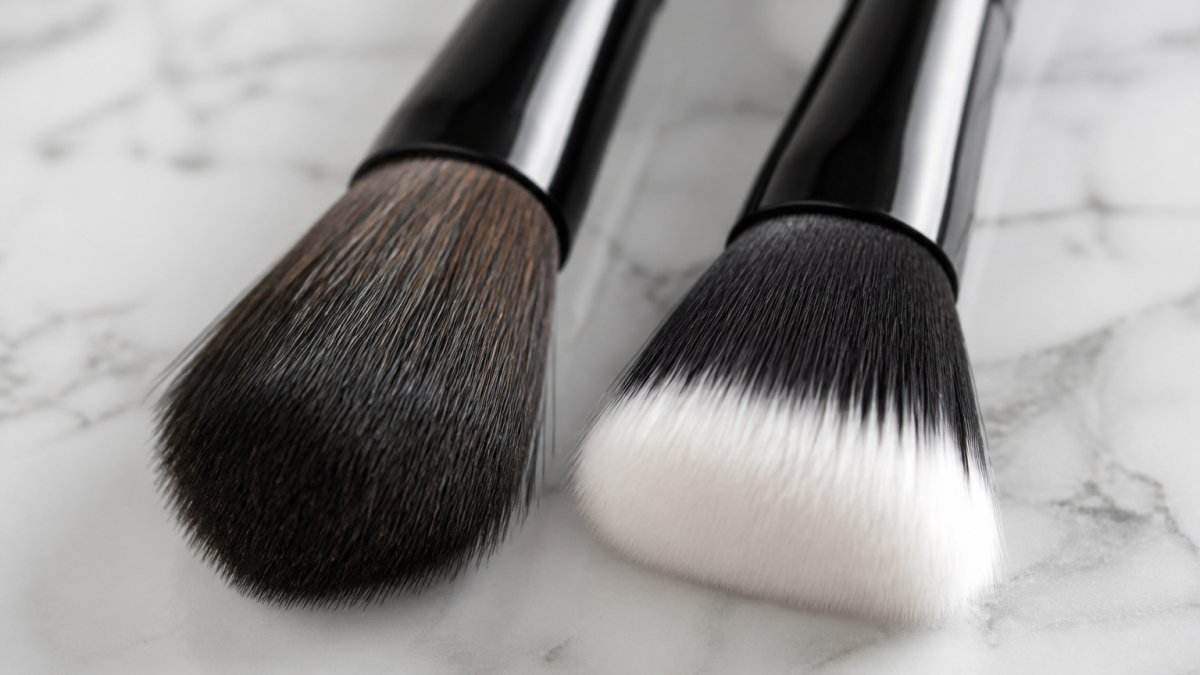
Quick Comparison Table
| Feature | Natural Bristles | Synthetic Fibers |
|---|---|---|
| Best for | Powder, bronzer, blush | Liquid foundation, cream, concealer |
| Material | Animal hair (goat, sable, squirrel) | Nylon, polyester, taklon |
| Water pickup | Absorbs and wastes product | Repels water, releases fully |
| Softness | Varies by animal | Consistent, often softer |
| Cleaning | Harder, dries slowly | Easy, dries fast |
| Ethics | Animal sourcing concerns | Vegan and cruelty-free |
| Cost | Often higher | More affordable |
| Lifespan | 1-3 years with care | 2-5 years with care |
Material Differences: What Natural Hair and Synthetic Fibers Are Made From
Natural bristle brushes use animal hair. Goat hair is the most common, followed by sable, squirrel, and pony.
Synthetic brushes use manufactured fibers, usually nylon, polyester, or a blend called taklon.
That smoothness matters for liquids. A synthetic fiber won't soak up your foundation the way animal hair does, so more product ends up on your face instead of trapped inside the brush.
The engineering behind a "good" synthetic
Not all synthetics are equal, and the differences are physical, not marketing:
- Tapered filaments. Better synthetics are drawn to a fine point rather than cut flat, which is what lets them form a sharp edge for eyeliner or detail work.
- Flagged tips. Some fibers are split at the end like a natural hair cuticle, which improves powder pickup. This is the main reason a quality synthetic powder brush can now rival goat hair.
- Crimping and waviness. Fibers are heat-set into a curve so the head keeps its shape instead of splaying after a few washes.
- Diameter and density. Thicker filaments feel firmer and are used for buffing; finer filaments are packed tighter for softness and blending.
Hybrid and blended fibers
A growing middle category blends natural and synthetic filaments in one head, or blends two synthetic polymers to balance spring and softness. These hybrids are worth knowing about because they often approximate natural-hair performance while keeping the easy cleaning and lower cost of synthetics. If you want the powder pickup of goat hair but the wash-and-go care of taklon, a blend is usually the compromise.
The same logic applies to paintbrushes
If you paint rather than apply makeup, the material rules carry over almost unchanged:
- Watercolor. Natural hair, especially sable and squirrel, holds water and keeps a point, which suits washes and fine detail. Synthetics have improved dramatically here and are now the default recommendation for beginners because they hold a point well and cost far less.
- Oil and acrylic. Stiff natural bristle (hog hair) moves thick paint and leaves visible texture. Synthetic filaments are the better pick for acrylics because water-based paint and harsh cleaning shorten the life of animal hair, and synthetics resist the solvents and soaps used to clean up.
- Detail and liner work. A tapered synthetic or a sable round gives the sharpest point; a flat hog bristle is for blocking in color, not for fine lines.
In short, the material question isn't "natural versus synthetic" so much as "what does this fiber do to water, powder, or paint?" Answer that and the right brush picks itself.
Synthetic Makeup Brushes for Liquid Foundation
Synthetic makeup brushes for liquid foundation are the clear winner, and it isn't close. The non-porous fibers push water-based and silicone-based formulas onto the skin instead of swallowing them.
For a streak-free application, look for densely packed fibers. Our Synthetic All-in-1 Oval Brush ($42.99) has velvety, densely packed bristles that create an airbrushed effect, and the pointed tip reaches under the eyes and along the contours of the face.

A common mistake is using a natural hair brush for foundation and wondering why it eats half the bottle. That's not a formula problem. It's the wrong tool.
Natural Bristle Makeup Brushes for Powder
Natural bristle makeup brushes for powder remain the traditional pick because animal hair's rough cuticle grips loose powder and releases it evenly.
That said, modern synthetics have closed much of the gap. Our Synthetic Kabuki Brush ($35.99) uses an oversized head of soft synthetic bristles to buff powder, bronzer, and highlighter across the face, neck, and décolletage with even coverage.

If you love the feel of natural hair on powder, keep one or two in your kit. If you want one brush that does everything and cleans easily, synthetic covers more ground.
How to Tell If a Makeup Brush Is Synthetic or Natural
The fastest test is a drop of water. Put a single drop on the bristles and watch. Natural hair absorbs it and the fibers darken and swell. Synthetic fibers repel the water and it beads on the surface.
A few other tells:
- Split ends: Natural hair has a tapered, split tip. Synthetic fibers usually have a blunt, uniform cut.
- Shine: Synthetic fibers often look slightly glossy under light. Natural hair looks matte.
- Smell: New natural hair brushes can carry a faint animal scent. Synthetic brushes smell like nothing.
- Price and label: Most brushes under a certain price point are synthetic. Check the packaging for words like "vegan," "cruelty-free," or "taklon."
If the label is missing and the water test is unclear, the shine and split-tip check will usually settle it.
Synthetic All-in-1 Oval Brush →
How to Clean Makeup Brushes: Care for Both Fiber Types
How to clean makeup brushes depends on the fiber, because natural hair and synthetics have different tolerances. Synthetic fibers are tough and forgiving. Natural hair needs a gentler hand and dries more slowly.
For synthetic brushes:
- Wet the bristles with lukewarm water, keeping the ferrule dry
- Add a drop of gentle soap or brush cleanser
- Swirl in your palm or a silicone mat until the water runs clear
- Squeeze out excess water and reshape the head
For natural bristle brushes:
- Use a milder cleanser and cooler water
- Avoid soaking the base, which can loosen the glue
- Never use hot water, which strips natural oils and dries out the hair
- Dry flat and away from direct heat
A quick weekly clean keeps product from building up and extends the life of any brush. Deep-clean foundation brushes every one to two weeks, and powder brushes monthly.
Durability, Cost, and Ethical Sourcing: What to Weigh
Durability and cost favor synthetics in most cases. Synthetic fibers resist breakage, hold their shape through repeated washing, and don't attract moths or harbor bacteria the way animal hair can. A quality synthetic brush can last two to five years with regular cleaning. Natural hair brushes need more delicate care.
That's the standard answer. Here's the part most comparisons leave out.
Cost per use, not sticker price
A brush's real cost is its price divided by how many uses you get before it stops performing. A $12 synthetic foundation brush used four times a week for two years works out to roughly a few cents per application. A $60 natural-hair powder brush used twice a week for three years lands in a similar range, the higher price is offset by fewer, gentler uses.
What actually shortens a brush's life
- Water in the ferrule. The metal band that holds the bristles is glued; standing water dissolves that glue and the head sheds. This kills natural and synthetic brushes equally.
- Hot water and harsh soap. They strip oils from animal hair and can dull or warp synthetic filaments.
- Drying upright. Gravity pulls water into the ferrule. Dry flat or bristles-down.
- Product buildup. Leftover foundation or oil hardens at the base and splays the head.
Fix those four habits and both fiber types outlast their expected lifespan.
Sourcing and animal welfare
Animal hair sourcing raises real welfare questions, and not every "natural" brush comes from a traceable supply chain. If animal welfare is a priority, look for explicit "vegan" and "cruelty-free" claims, which are straightforward to verify, rather than relying on the word "natural." The Humane Society guidance on animal-derived cosmetics is a reasonable starting point before buying any natural-hair brush.
The environmental trade-off nobody mentions
Synthetics avoid animal sourcing but are made from petroleum-derived plastics (nylon, polyester) that don't biodegrade. Natural hair brushes biodegrade but carry the welfare and sourcing concerns above. Neither option is clean. The most sustainable choice in practice is the one you keep longest: buy fewer, better brushes, clean them properly, and replace them when they fail rather than when a trend changes.
A quick way to decide
- Want the lowest cost per use and easiest care? Synthetic.
- Want the traditional feel for powder or watercolor washes? Natural hair, cared for gently.
- Want a middle path? A blended or hybrid head, or a high-quality tapered synthetic that mimics natural performance.
That's why our full brush line, from the Synthetic Oval Makeup Brush Set - 10 Piece ($78.99) to the Set of 15 Professional Synthetic Makeup Brushes ($187.99), is vegan and cruelty-free. If you want a natural hair option for powder, our Foundation Makeup Brush ($30.99) uses soft goat hair bristles and works with both liquid and powder formulas.

Frequently Asked Questions
What is the difference between natural bristles and synthetic brushes?
Natural bristles come from animal hair, such as goat, squirrel, or sable, with a cuticle structure that holds powder and releases it evenly. Synthetic brushes are made from nylon, polyester, or other man-made fibers, which are smooth and non-porous. This means synthetics do not absorb liquid or cream products, so more foundation reaches your skin instead of soaking into the brush. Natural bristles work best with powders, while synthetics handle liquids and creams more efficiently.
Are natural or synthetic makeup brushes better?
It depends on the product you use. Synthetic brushes are better for liquid foundation, concealer, and cream products because the smooth fibers do not absorb moisture, giving you fuller coverage with less waste. Natural bristle brushes are better for powder products because the textured cuticle picks up and distributes powder evenly. Many makeup routines use both types. For an all-in-one option, a synthetic brush like the Cosmetikly All-in-1 Oval Brush ($42.99) works with foundation, powder, cream, and primer.
How can you tell if a brush is synthetic or natural?
Check the label first, since most brushes list fiber type. If there is no label, look at the tips: natural bristles have split ends (flagged tips) that feel slightly rough, while synthetic fibers have smooth, uniform tips. You can also press the bristles into your hand. Natural hair bends with a springy resistance and may feel coarser; synthetic fibers feel silky and glide across skin. Finally, natural bristles absorb water and take longer to dry, while synthetic fibers shed water quickly.
Are synthetic makeup brushes easier to clean?
Yes, generally. Synthetic fibers do not absorb water or product the way natural hair does, so a gentle soap and lukewarm water removes buildup quickly. Natural bristle brushes need more careful washing because water can seep into the ferrule and break down the glue over time. For both types, wash with mild soap, rinse until the water runs clear, reshape the bristles, and dry flat with the head angled downward so water does not pool inside the brush.
How do you care for natural bristle makeup brushes?
Wash natural bristle brushes every one to two weeks with a gentle soap or brush cleanser. Avoid soaking the bristles in water, since moisture can loosen the glue holding the ferrule. Instead, wet only the tips, lather gently, and rinse with the brush pointing down. Lay the brush flat to dry with the head slightly lower than the handle. Store upright in a holder or pouch to maintain shape.
The natural bristles vs synthetic debate doesn't have a single winner. It has a right answer for your routine. If you're a liquid-and-cream user who wants easy cleaning and no animal sourcing questions, synthetic is the better call. Cosmetikly builds our brushes around vegan synthetic fibers with densely packed bristles, sturdy handles, and a full range of shapes for face, eyes, and lips. Explore our premium makeup tools and accessories to find the set that fits how you actually do your makeup.