

Build a Skincare Routine for Beginners: Step-by-Step
Table of Contents
- How to Identify Your Skin Type
- The Foundation: Understanding Cleansing and Exfoliation
- Skincare Routine Order for Beginners: Layering Products Correctly
- How to Improve Skin Texture Naturally with Active Ingredients
- Sun Protection and the Complete Picture
- Building Your Routine: Patch Testing and Starting Slow
- Common Mistakes to Avoid When Starting a Skincare Routine
- Frequently Asked Questions
Last Updated: September 29, 2026
How to Identify Your Skin Type
Understanding your skin type is the foundation of any effective skincare routine beginners need to succeed. Your skin falls into one of five categories: oily, dry, combination, sensitive, or normal, each requiring different approaches to cleansing and treatment.
Wash your face with a gentle cleanser and wait two hours without applying products. Examine your skin in natural light: tight and flaky indicates dry skin; shiny across the T-zone indicates oily or combination skin; balanced and comfortable indicates normal skin; easy reactivity to products indicates sensitive skin.
Combination skin is common, with an oily T-zone and dry cheeks requiring different products per zone. Acne-prone skin often overlaps with oily skin due to excess sebum.
Once identified, match products to your skin type to prevent irritation and wasted purchases. Dry skin using oily-skin products causes tightness; sensitive skin using harsh exfoliants triggers inflammation.
The Foundation: Understanding Cleansing and Exfoliation
Why Cleansing Matters
Cleansing is the non-negotiable first step in any skincare routine for beginners. Dirt, oil, makeup, and pollutants clog pores and prevent other products from absorbing effectively.
Choose gentle, hydrating cleansers without sulfates. A simple water-soluble cleanser works well for beginners.
Cleanse twice daily, morning and evening, to prevent pore congestion and allow active ingredients to absorb effectively.
Exfoliation Frequency and Methods
Exfoliation removes dead skin cells, but over-exfoliation damages the skin barrier, causing sensitivity and breakouts.
Start with gentle exfoliation once or twice weekly. Chemical exfoliants (glycolic or salicylic acid) are gentler and more effective than physical scrubs, especially for sensitive or acne-prone skin.
Salicylic acid suits oily and acne-prone skin; glycolic acid suits dry or normal skin. Use one exfoliant method and observe for 2-3 weeks before adjusting frequency. Never combine multiple exfoliants.
Skincare Routine Order for Beginners: Layering Products Correctly
Thinnest to Thickest: The Golden Rule
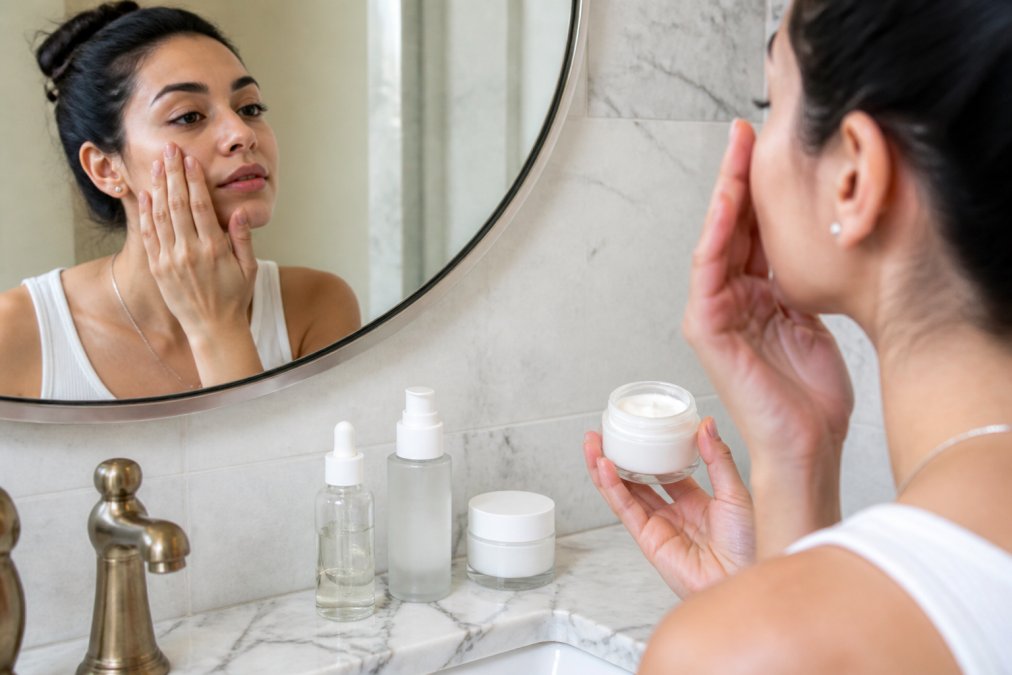
Layer products from thinnest to thickest consistency to ensure proper absorption.
Apply in order: cleanser → toner (optional) → serum → treatment (optional) → moisturizer → SPF (morning only). Serums absorb quickly; moisturizers seal them in.
This layering order maximizes effectiveness and prevents wasting money on treatments that cannot penetrate.
Morning vs. Evening Routines
Morning routine: cleanser → serum (vitamin C or hyaluronic acid) → lightweight moisturizer → SPF.
Evening routine: cleanser → toner (optional) → serum → treatment → richer moisturizer. Use active ingredients like retinoids at night when skin isn't exposed to sun damage.
SPF is essential in the morning but unnecessary at night. Evening routines enable intensive treatments because skin repairs itself without UV exposure.
How to Improve Skin Texture Naturally with Active Ingredients
Understanding Active Ingredients: What They Are and Why Concentration Matters
Active ingredients create measurable skin changes. Concentration and mechanism of action determine effectiveness and whether a product overlaps with what you already own.
Common actives and their roles:
- Retinoids, Increase cell turnover; take 8-12 weeks to show results. Concentration matters: 0.3% retinol is gentler than 1%.
- Hydroxy acids, Dissolve dead skin cells. Glycolic acid (5-10%) suits dry skin; salicylic acid (0.5-2%) suits oily skin.
- Niacinamide, Regulates oil and strengthens barrier at 4-5% concentration. Works with most actives.
- Vitamin C, Brightens at 10-20% concentration. Unstable; use dark packaging and within 3 months.
- Peptides, Support collagen; work best combined with other actives.
- Hyaluronic acid, Apply to damp skin and seal with moisturizer to prevent drawing water out.
Avoiding Redundancy: How to Build a Minimalist Active Routine
Avoid buying multiple products with the same active ingredient; this wastes money and risks over-concentration irritation.
Choose one active per concern: texture improvement (hydroxy acid OR retinoid, not both), pore refinement (niacinamide alone), or hydration (hyaluronic acid serum + moisturizer).
A four-step skincare routine beginners should follow addresses 90% of concerns: cleanser, one active serum (retinoid, niacinamide, vitamin C, or hyaluronic acid based on your concern), moisturizer, and SPF 30+ (morning only).
Skincare Anti-Aging Anti-Wrinkle →
Introducing Actives Safely: Timing and Compatibility
Not all actives combine safely. Retinoids and hydroxy acids both increase cell turnover and cause excessive irritation together. Vitamin C and niacinamide are compatible, but this is an exception.
Safe combinations for beginners:
- Retinoid + moisturizer with ceramides and peptides (evening only)
- Niacinamide + hyaluronic acid + moisturizer (morning or evening)
- Vitamin C + hyaluronic acid + moisturizer (morning only; vitamin C is an antioxidant best used during the day)
- Hydroxy acid + niacinamide + moisturizer (use acid 2-3 times weekly, not daily)
Unsafe combinations:
- Retinoid + hydroxy acid (same week, even on different days)
- Multiple retinoids (retinol + adapalene, for example)
- Vitamin C + SPF with avobenzone (degrades the vitamin C)
Use one active for 4-6 weeks before adding a second. Introduce new actives on different days (e.g., retinoid Monday/Thursday evenings, niacinamide Tuesday/Friday mornings) to prevent overload.
Read the ingredient list, not just the marketing claim. A product labeled "anti-aging" might contain only peptides (gentle, slow results) or retinol (faster results, more irritation potential). Knowing the active and its concentration lets you make informed choices and avoid buying products that duplicate what you already own.
Sun Protection and the Complete Picture
SPF 30+ is non-negotiable daily protection against dark spots, wrinkles, and skin cancer risk.
Broad-spectrum SPF protects against UVA (aging) and UVB (sunburn) rays. Moisturizer alone is insufficient; apply a quarter-teaspoon of dedicated SPF every morning.
Daily SPF 30 provides better protection than occasional SPF 50. Make it automatic in your routine. Sun damage is cumulative and largely irreversible.
Building Your Routine: Patch Testing and Starting Slow
The Minimalist Approach: Do You Actually Need This Product?
Before buying, ask: Does this address a real problem or just marketing? Many beginners accumulate 10+ products when 4-5 deliver the same results. Fewer products reduce irritation risk and clarify what actually works.
Evaluate each product: Does it address a real concern (not hypothetical)? Does it contain an active you're not already using? Can you achieve the same result with what you own? Are you solving a problem or preventing a hypothetical one?
A complete beginner routine requires four steps: cleanser, one active serum (optional), moisturizer, and SPF 30+ (morning only). Add a fifth product only after 6-8 weeks if you've identified a specific gap.
Patch Testing: The Right Way
Patch test on a small area (behind ear, jawline, or inner arm) for 3-5 days, testing the product alone to isolate reactions. A negative patch test doesn't guarantee no facial reaction, as facial skin is more sensitive. Discontinue if any reaction occurs on your face.
The Introduction Timeline: Patience Prevents Wasted Money
Introduce one new product at a time, waiting at least one week between additions. This approach lets you identify which product causes any adverse reactions and gives your skin time to adapt to new ingredients.
Week 1: Introduce cleanser (if changing from your old one). Use it twice daily and observe for dryness, tightness, or irritation.
Week 2: Once the cleanser feels comfortable, introduce your first active serum or treatment.
Recognizing When a Product Isn't Working
After 6-8 weeks of consistent use, you should see some improvement: clearer skin, reduced oiliness, less dryness, or improved texture. If you see none, the product may not be right for you. However, before discarding it, consider:
- Are you using enough? Many actives require a specific amount (e.g., a quarter-teaspoon of retinol, a full dropper of serum). Using too little will not show results.
- Are you using it correctly? Vitamin C must be applied to clean, dry skin before other products. Retinoids should be used at night, not morning. Hydroxy acids work best on damp skin. Incorrect application reduces effectiveness.
- Is your expectation realistic? Serums improve texture and hydration within weeks. Retinoids reduce fine lines over months. Vitamin C fades dark spots over 8-12 weeks. If you're expecting results faster than the ingredient allows, the product may be working, you're just impatient.
- Is this a reaction or an adjustment period? Retinoids cause temporary peeling and redness. Hydroxy acids cause mild irritation initially. These are normal and usually resolve within 2-4 weeks. True allergic reactions (hives, severe swelling, persistent burning) require immediate discontinuation.
Common Mistakes to Avoid When Starting a Skincare Routine
The most common mistake is using too many products simultaneously. A beginner routine needs only four to five steps: cleanser, moisturizer, SPF, and optionally one serum or treatment. More products don't equal better results, they increase irritation risk and cost without additional benefit.
Frequently Asked Questions
What is a good skincare routine for a beginner?
A beginner skincare routine has three core steps: cleanser, moisturizer, and SPF during the day. At night, use a gentle cleanser followed by a moisturizer or serum. Start with dermatologist-tested, fragrance-free products suited to your skin type. Patch test each new product on a small area first to check for irritation. Most beginners see improvements in skin texture and hydration within 4-6 weeks of consistent use.
How do I determine my skin type before starting a routine?
Wash your face with a gentle cleanser and wait 30 minutes without applying anything. Oily skin will appear shiny; dry skin may feel tight; combination skin shows oil in the T-zone (forehead, nose, chin) but dryness elsewhere; sensitive skin reacts easily to products or environmental factors. You can also observe how your skin feels throughout the day. Knowing your skin type helps you choose products with the right consistency and active ingredients for your needs.
What is the correct order to apply skincare products?
Apply products from thinnest to thickest consistency: cleanser, toner (if used), serum, eye cream, moisturizer, then SPF in the morning. This order allows each product to absorb properly before the next layer. Serums with active ingredients like hyaluronic acid or vitamin C work best on clean, damp skin. Heavier moisturizers and oils go last to seal in hydration. Evening routines follow the same order but skip SPF and may include treatments like retinoids.
Can I use multiple serums together in my skincare routine?
Yes, you can layer serums, but avoid mixing incompatible active ingredients. Retinoids and vitamin C can be irritating together; use retinoids at night and vitamin C in the morning. Hyaluronic acid pairs well with most ingredients and boosts hydration. Start with one serum, then add a second after 2-3 weeks if your skin tolerates it. Always patch test new combinations and watch for signs of irritation like redness or excessive dryness.